Java Developer Resume
Best for: Java application developer roles
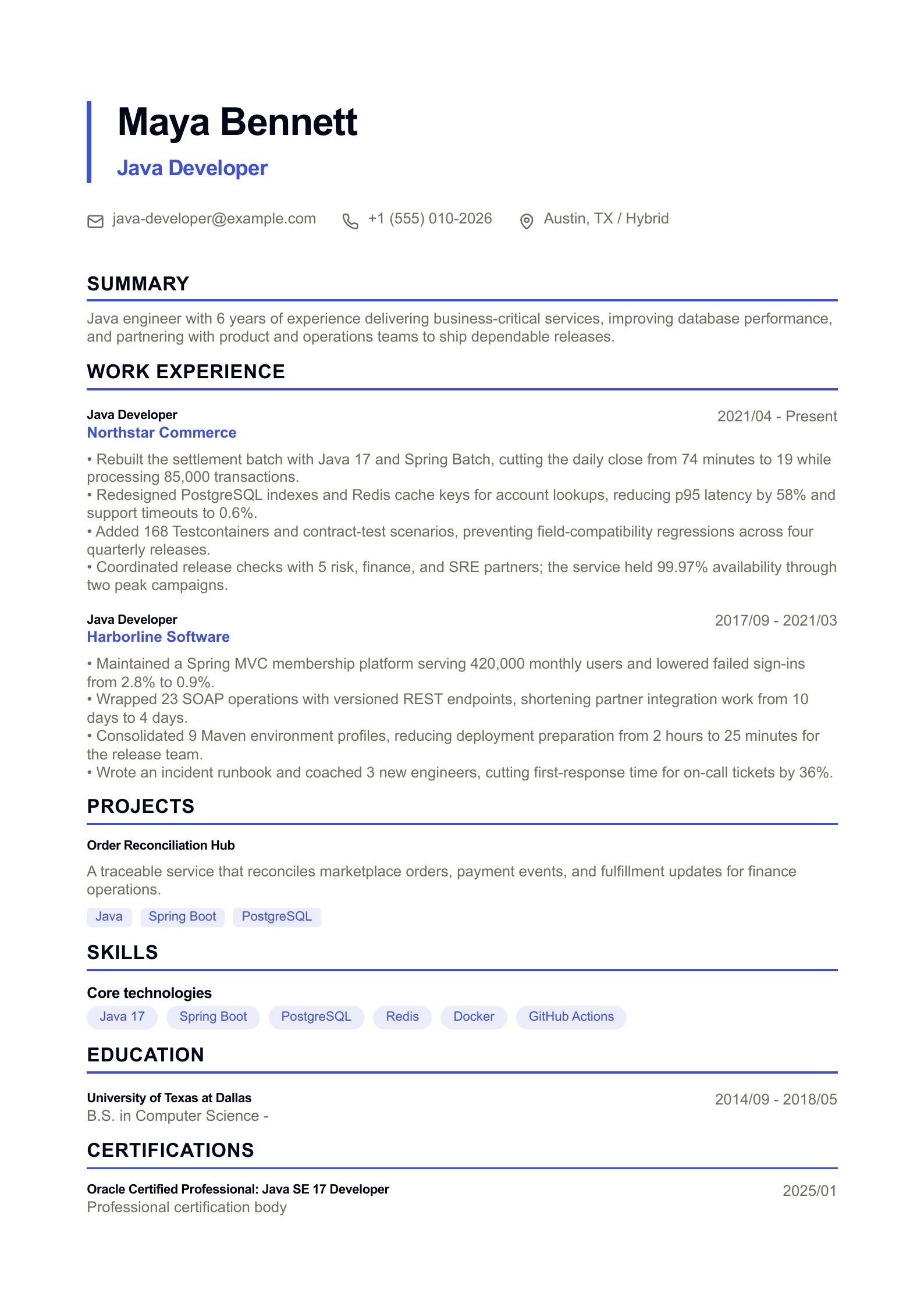
A product-focused Java example showing ownership from API design through production support.
Compare 15 English examples covering backend services, Spring Boot, cloud platforms, APIs, data pipelines, and measurable engineering results.
All names, companies, contact details, and metrics are fictional examples for educational use.
Start with a structure close to your experience, then replace the fictional details with evidence from your own work.
Best for: Java application developer roles
A product-focused Java example showing ownership from API design through production support.
Best for: Senior Java platform and architecture roles
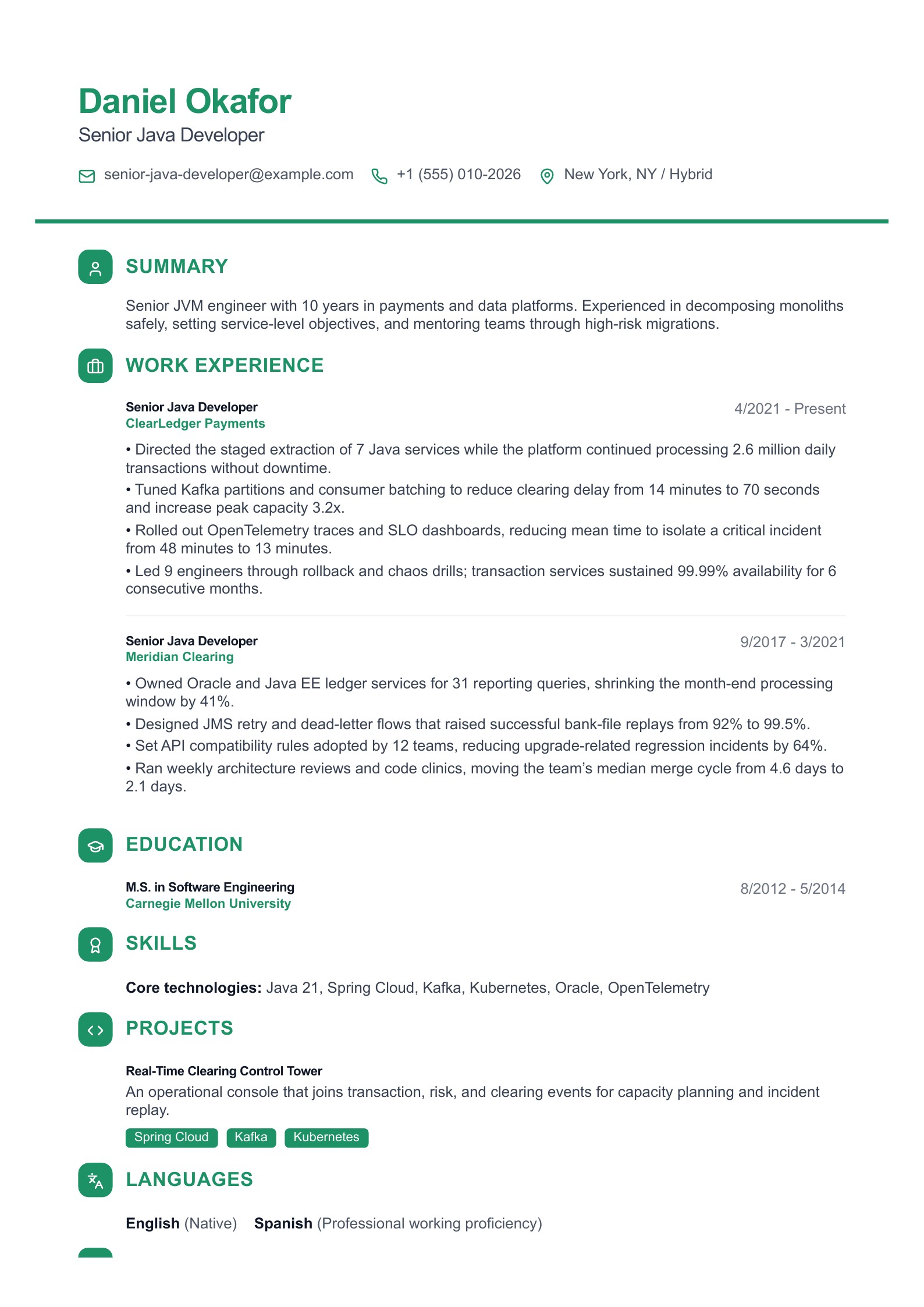
A senior profile centered on high-volume transaction services, architecture decisions, and reliability leadership.
Best for: Java backend and microservices positions
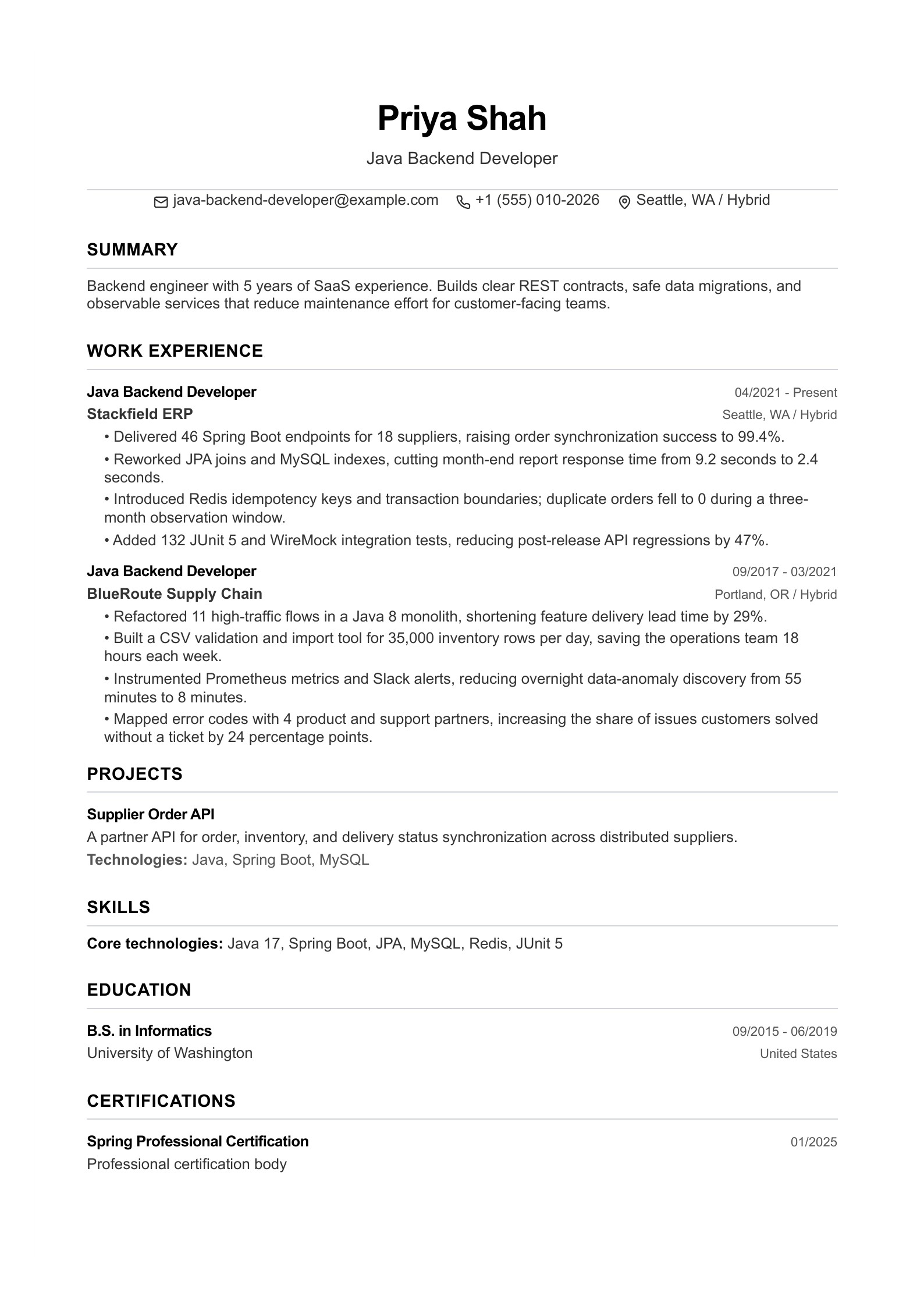
A backend-focused example covering REST contracts, data modeling, idempotency, and testable delivery.
Best for: Java developers with 1–3 years of experience
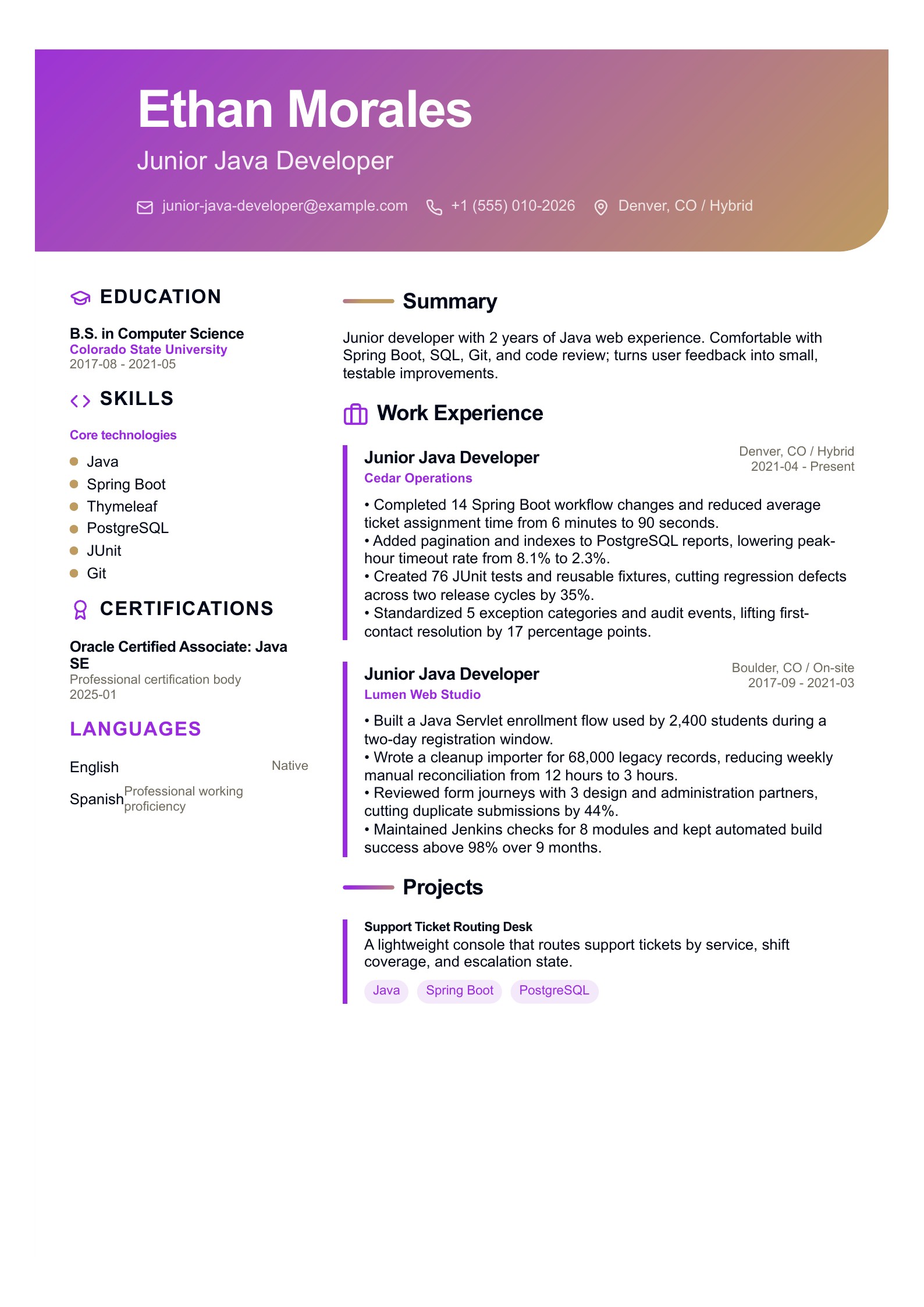
An early-career example that uses production maintenance, testing, and measurable workflow improvements.
Best for: Java tech lead, engineering manager, and architecture roles
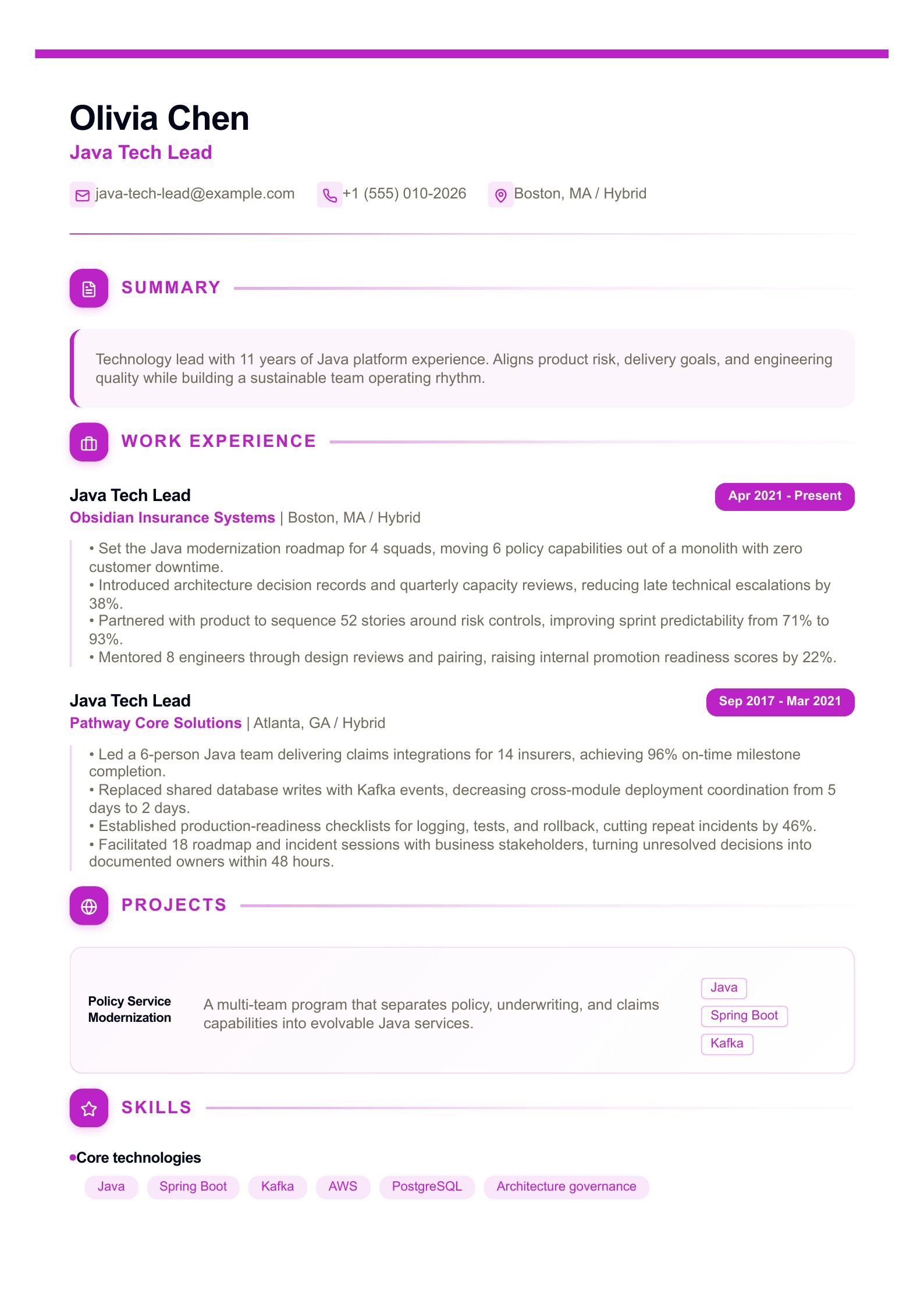
A leadership-oriented Java example balancing architecture governance, delivery cadence, and team development.
Best for: Java full stack and product engineering roles
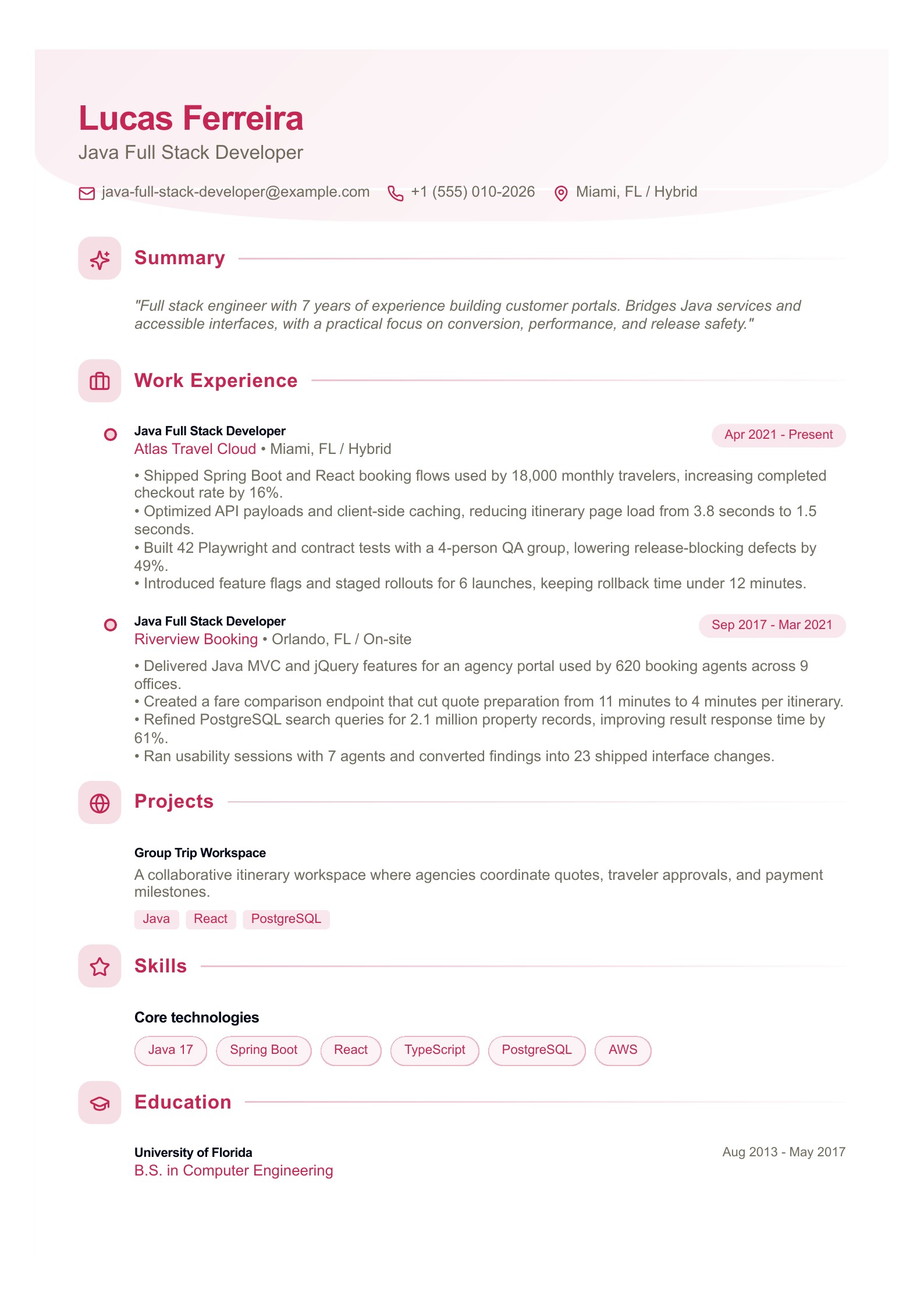
A balanced Java example connecting Spring APIs, React workflows, and customer-facing product outcomes.
Best for: Java and AWS application development roles
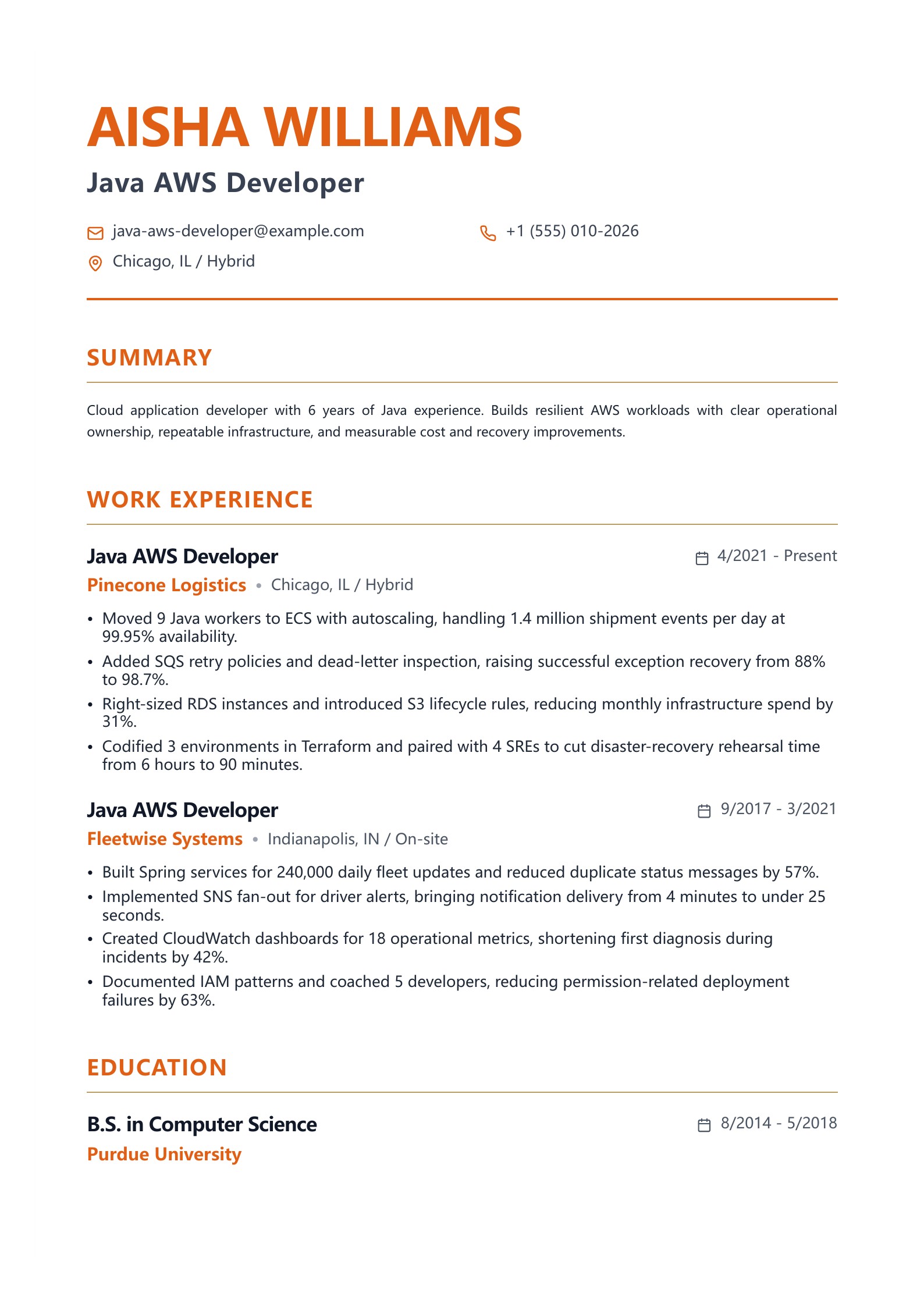
A cloud-focused profile showing Java services, AWS eventing, infrastructure automation, and cost control.
Best for: Spring Boot backend and microservices roles
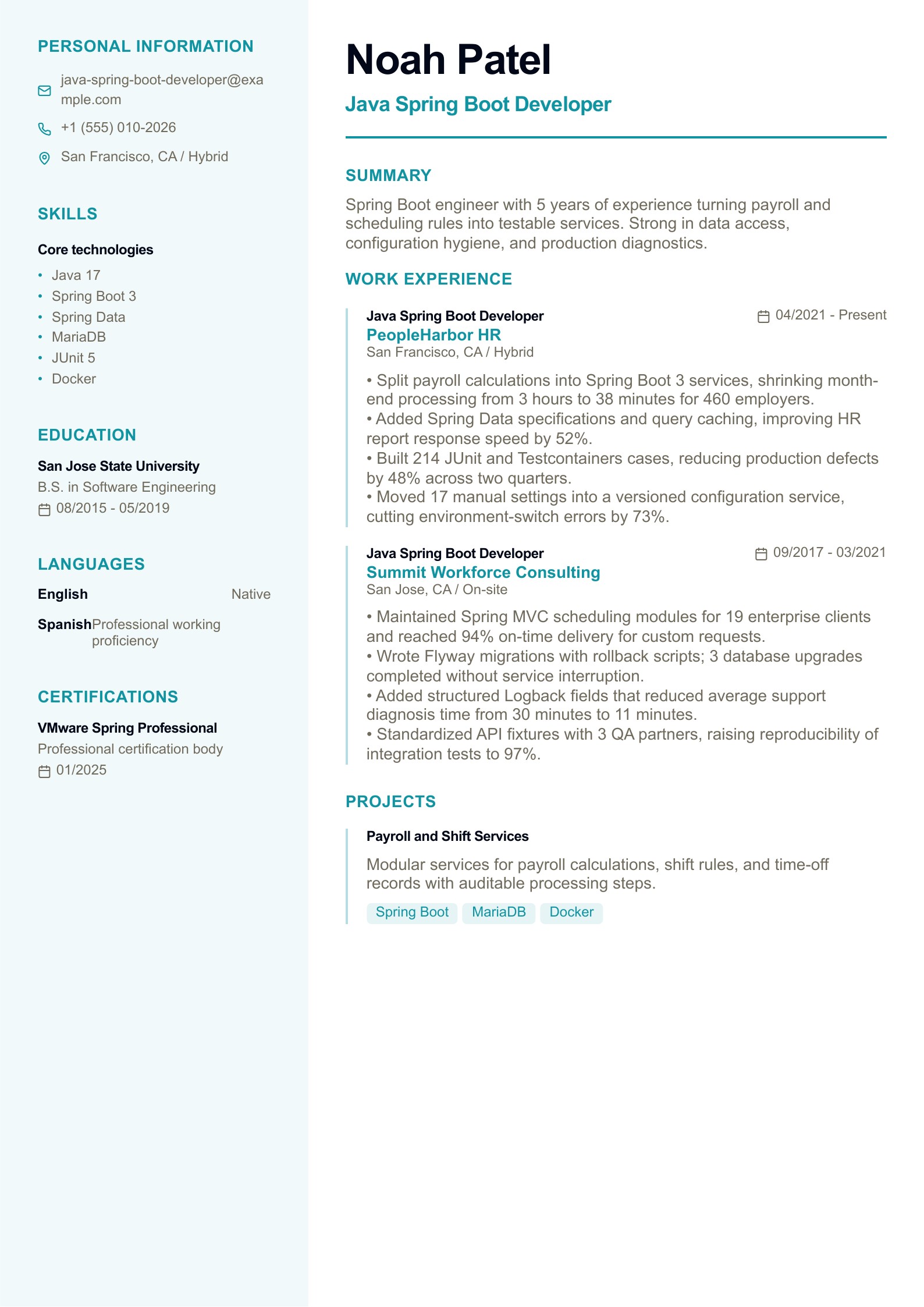
A Spring Boot specialist profile focused on modular services, migrations, tests, and maintainability.
Best for: Java GCP and cloud data service roles
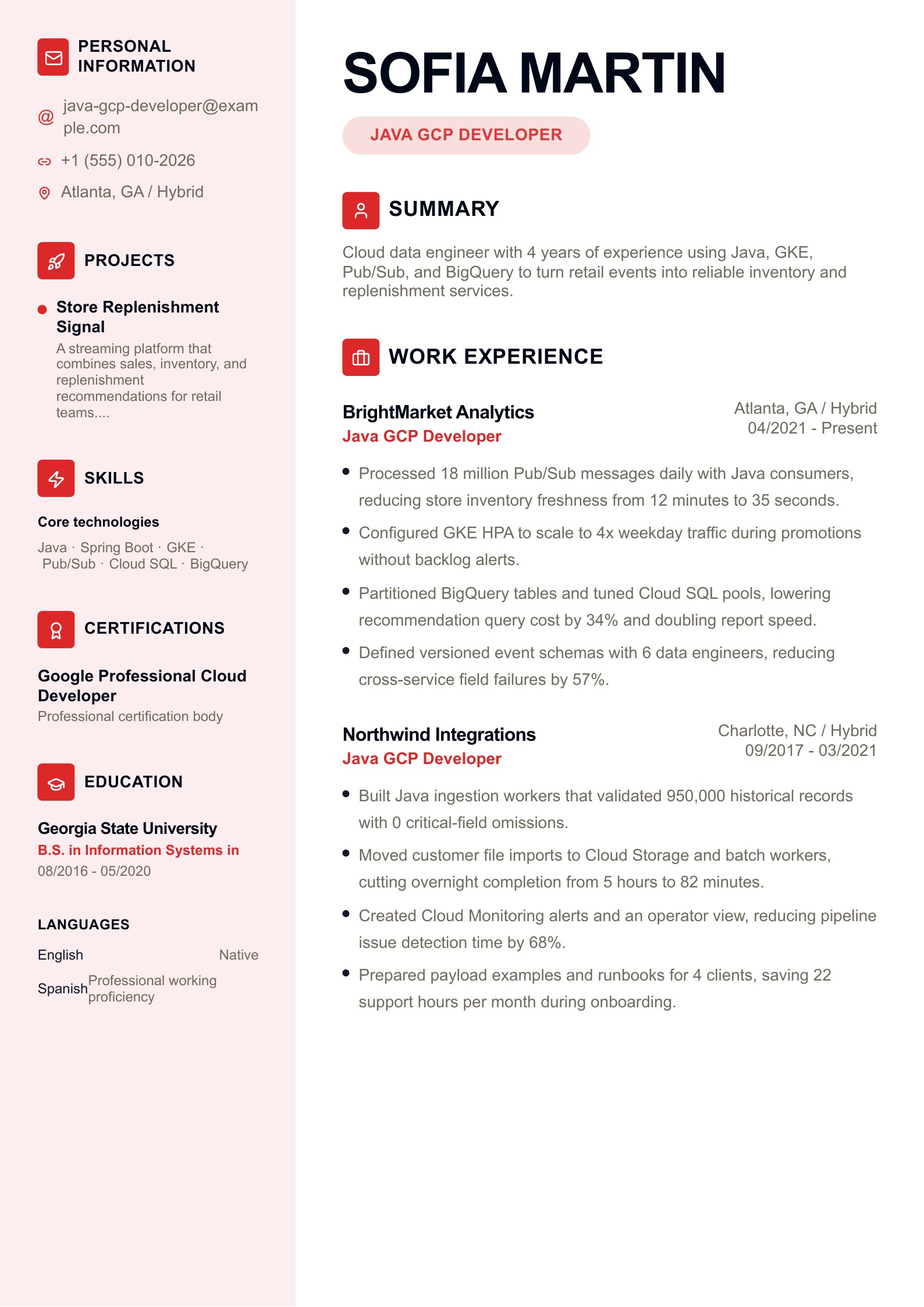
A Google Cloud example covering Java event processing, GKE operations, and analytical workloads.
Best for: Java API, integration, and platform roles
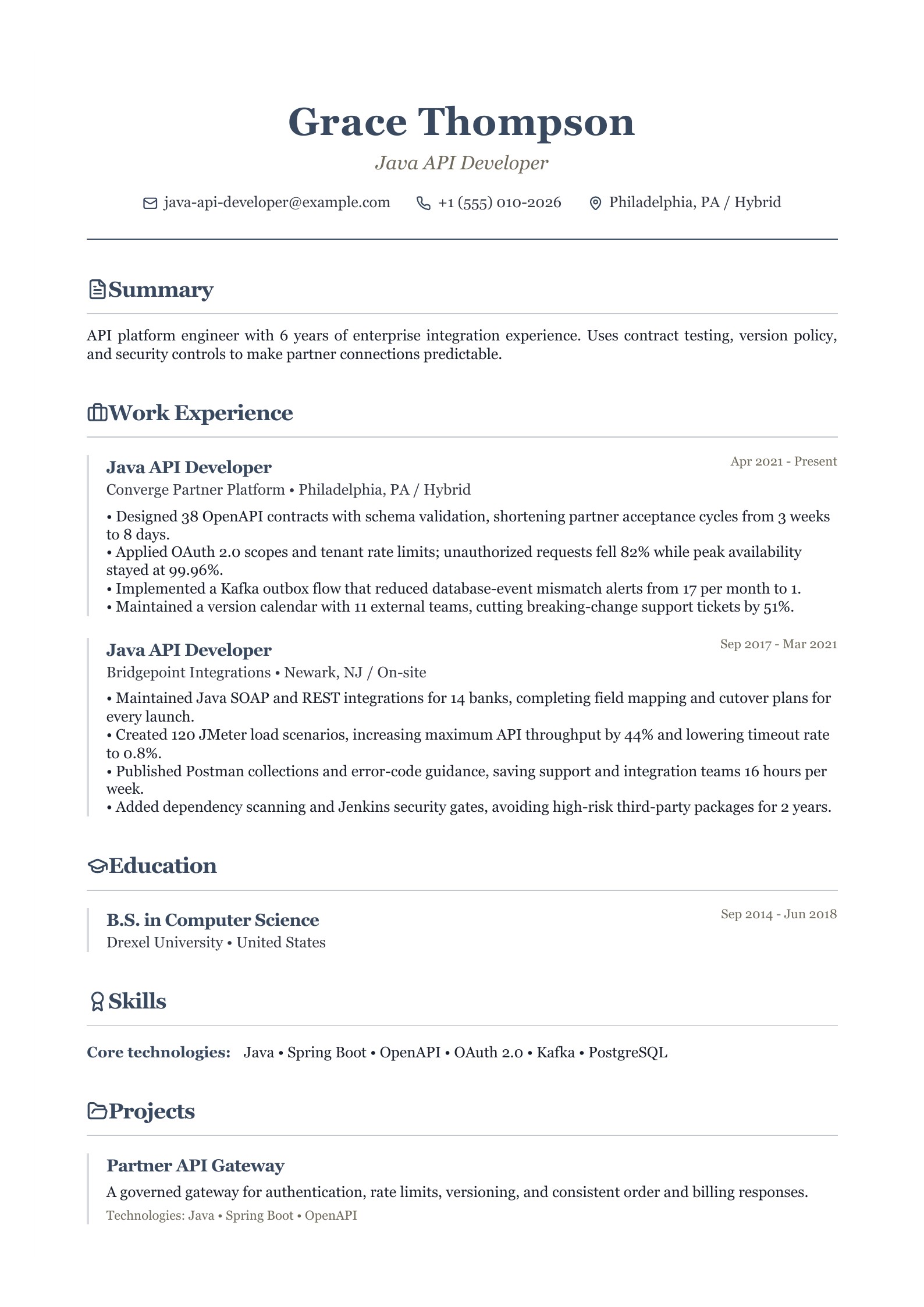
An API platform example focused on contracts, versioning, security, and reliable partner integrations.
Best for: Java web, enterprise UI, and integration roles
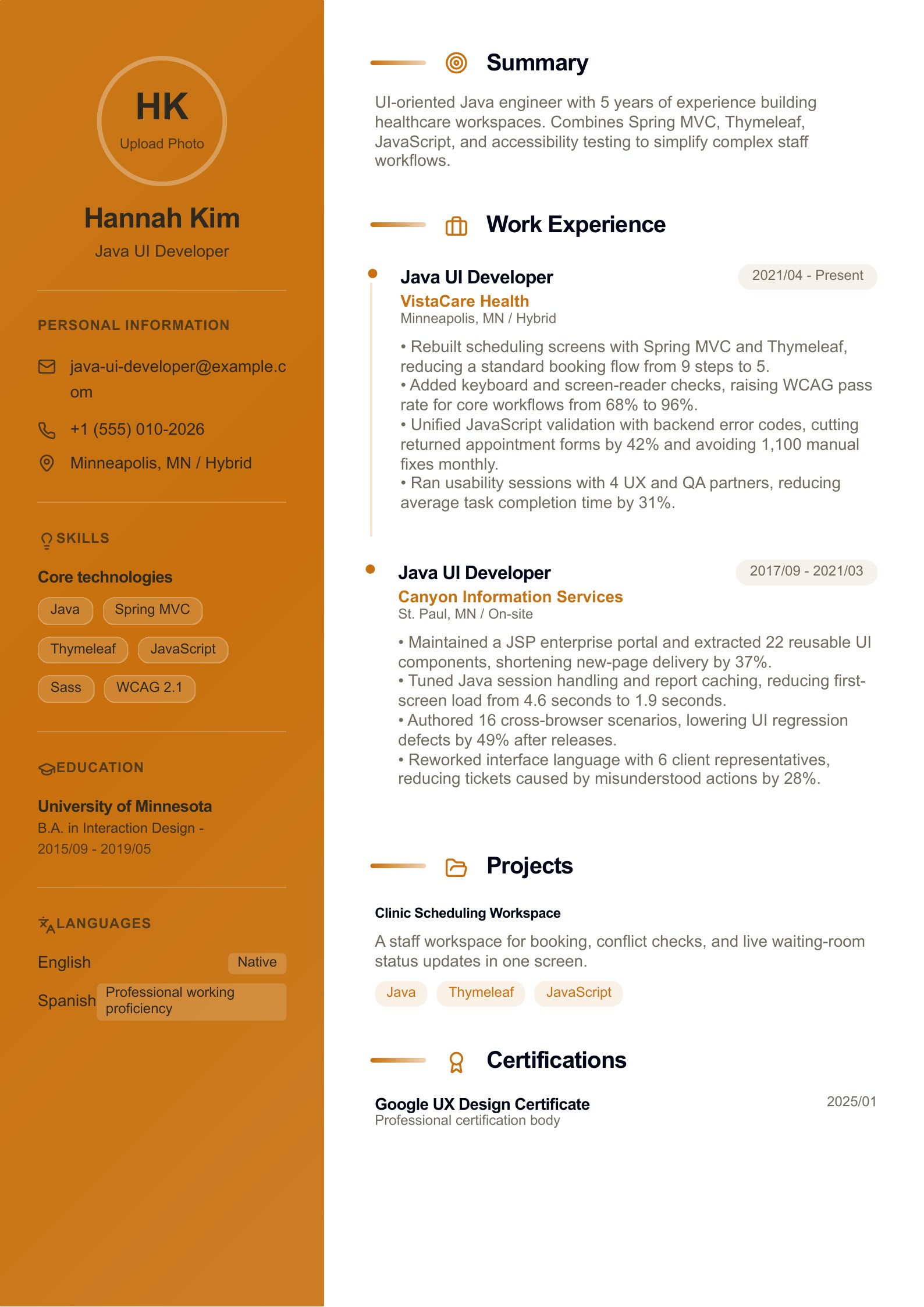
A Java web and interface example combining accessible UI work with backend integration and workflow metrics.
Best for: Java Spark, data platform, and batch engineering roles
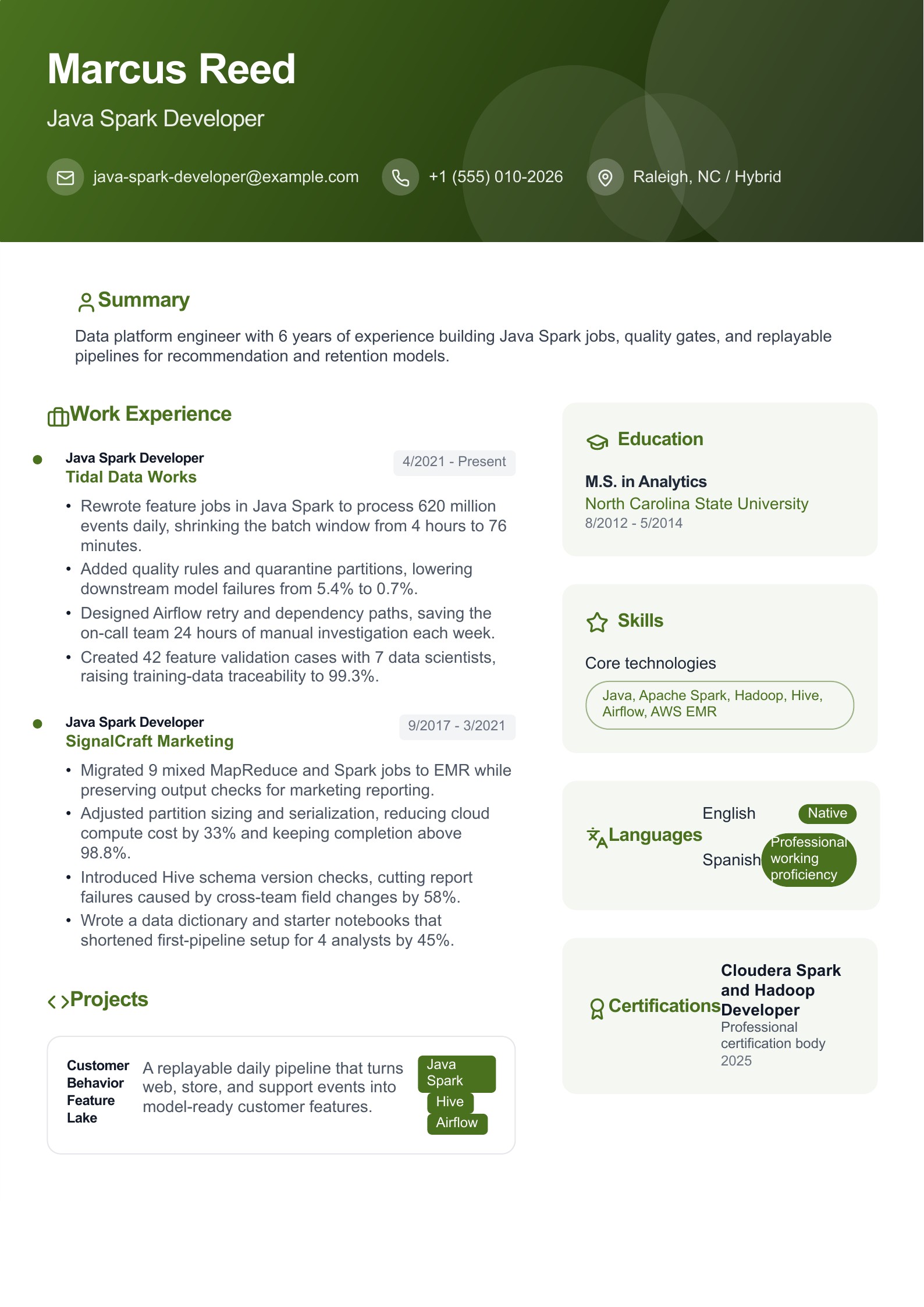
A data-platform profile showing Java Spark pipelines, quality controls, and large-scale batch processing.
Best for: Scrum teams and continuous-delivery Java roles
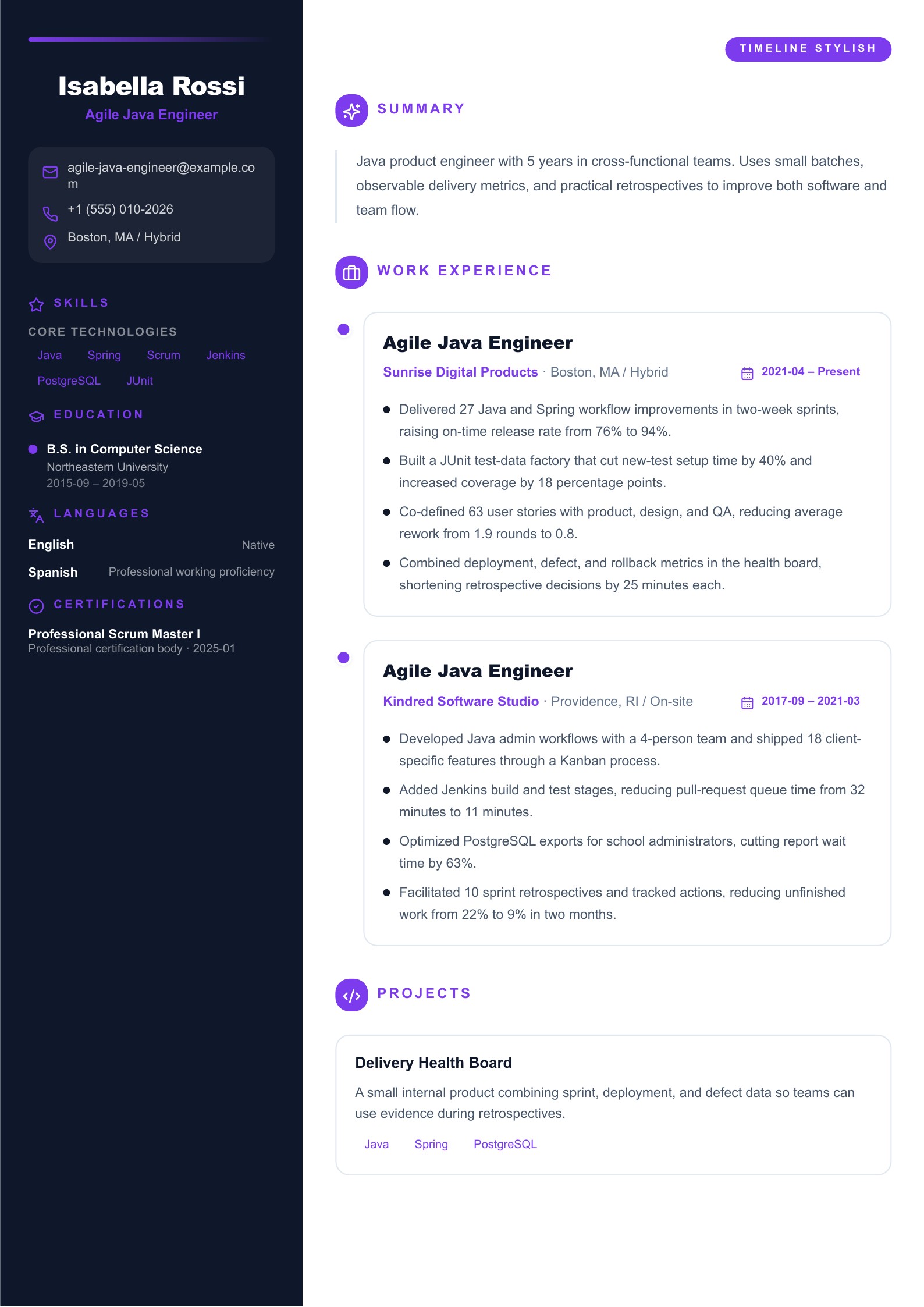
An Agile product-team example connecting Java delivery, refinement quality, and measurable process improvements.
Best for: Java/Kotlin platform and JVM application roles
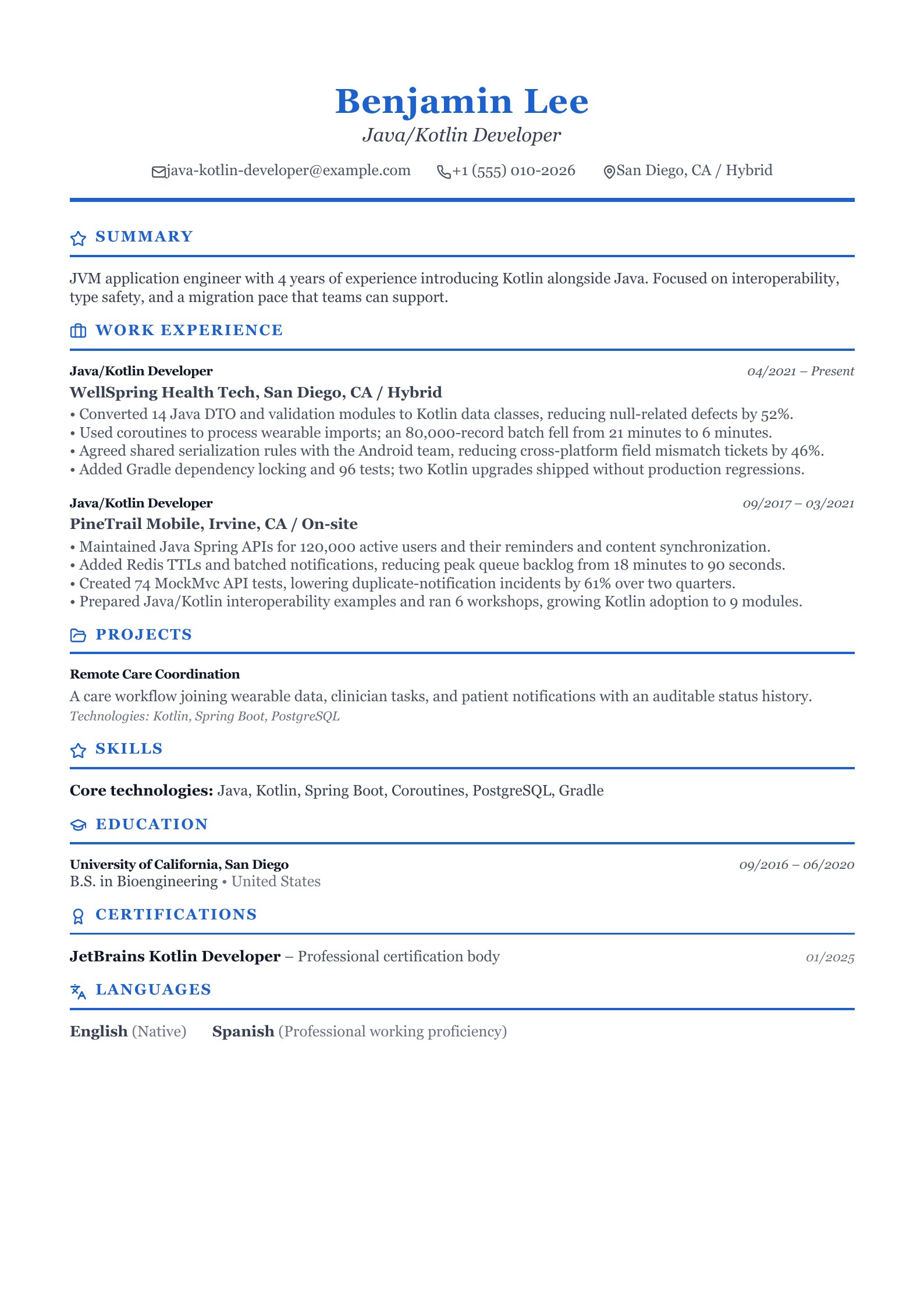
A JVM modernization example showing safe Kotlin adoption inside established Java services.
Best for: Azure Java and enterprise cloud application roles
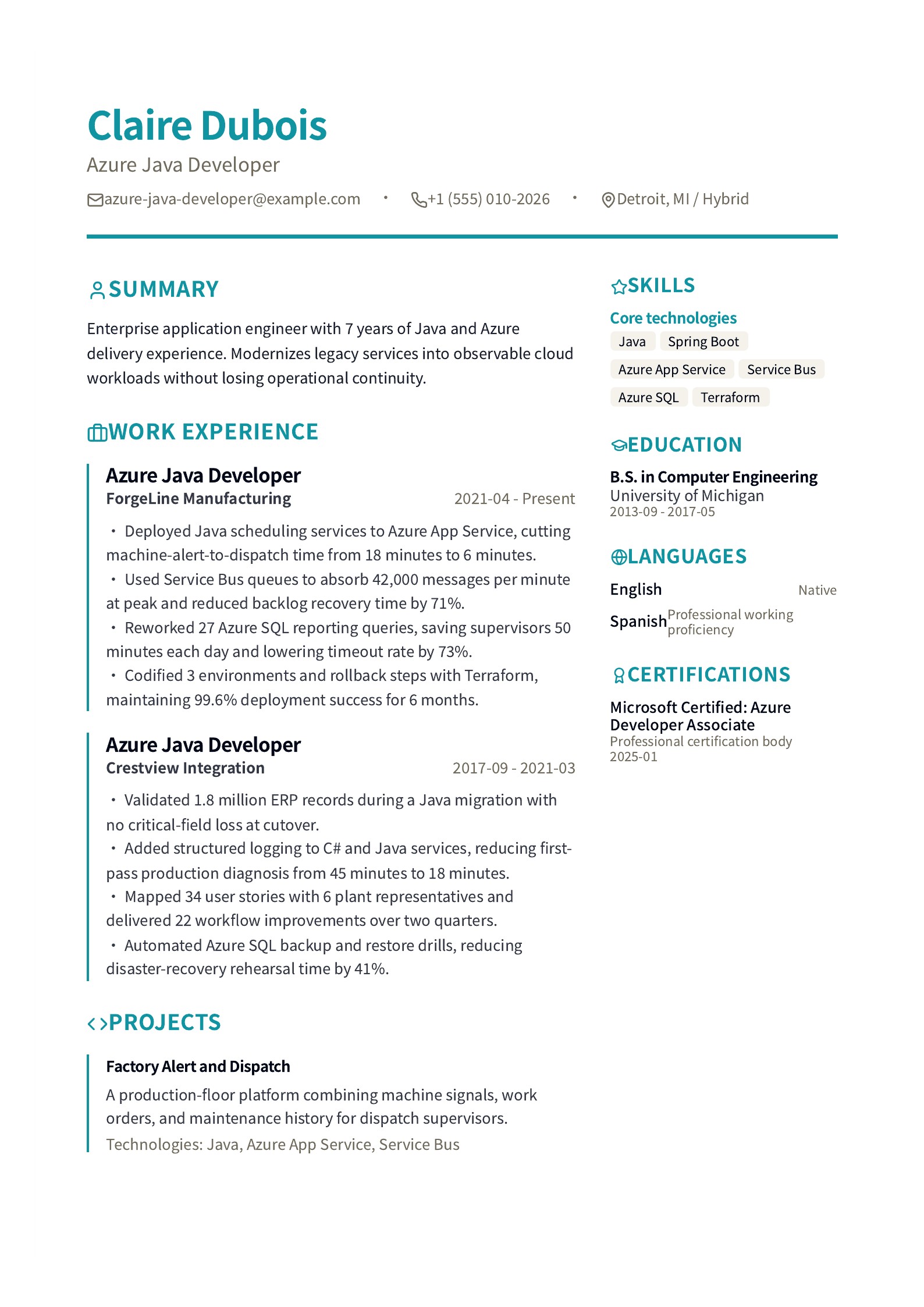
An enterprise cloud migration example using Java, Azure App Service, Service Bus, and infrastructure as code.
A strong Java resume makes the system boundary, technical judgment, and business result easy to understand. It should read like evidence, not a framework inventory.
Start with a change a hiring manager can judge: lower latency, fewer failed jobs, shorter release cycles, reduced cloud spend, or more completed transactions. Then explain how Java, Spring, a database, or a messaging platform enabled it.
Say whether you designed the API, migrated the schema, added tests, operated the service, or coordinated the rollout. “Built a retry path for 2.6 million daily events” is clearer than “helped with backend work.”
Include request volume, data size, team size, release cadence, legacy limitations, or reliability targets when they explain the result. Use metrics you can define and defend in an interview.
Instead of “Maintained Spring services,” write: “Reworked 46 Spring Boot endpoints for 18 suppliers, raising order synchronization success to 99.4% and cutting month-end report latency from 9.2 seconds to 2.4 seconds.”
Show the systems you owned, the constraints you worked within, and the measurable result. Name Java and Spring components in context rather than presenting a disconnected tool list.
Keep the most relevant two to four roles. Give each role four focused bullets that explain your action, technical setting, scale, and outcome.
Use request volume, records processed, latency, error rate, availability, deployment frequency, test count, cost, or hours saved. Choose figures you can explain in an interview.
Use a concise skills section for searchability, then repeat only the tools that matter in each achievement. The bullet should make clear what the technology changed.
Include internships, university systems, freelance work, support automation, or portfolio services. State what you built, who used it, how you tested it, and what improved.
The PDFs are reference examples. Use the Edit this resume link to open a fresh editable document, then replace every fictional name, company, and metric with your own evidence.