Web Developer Resume
Best for: General web developers and website product engineers
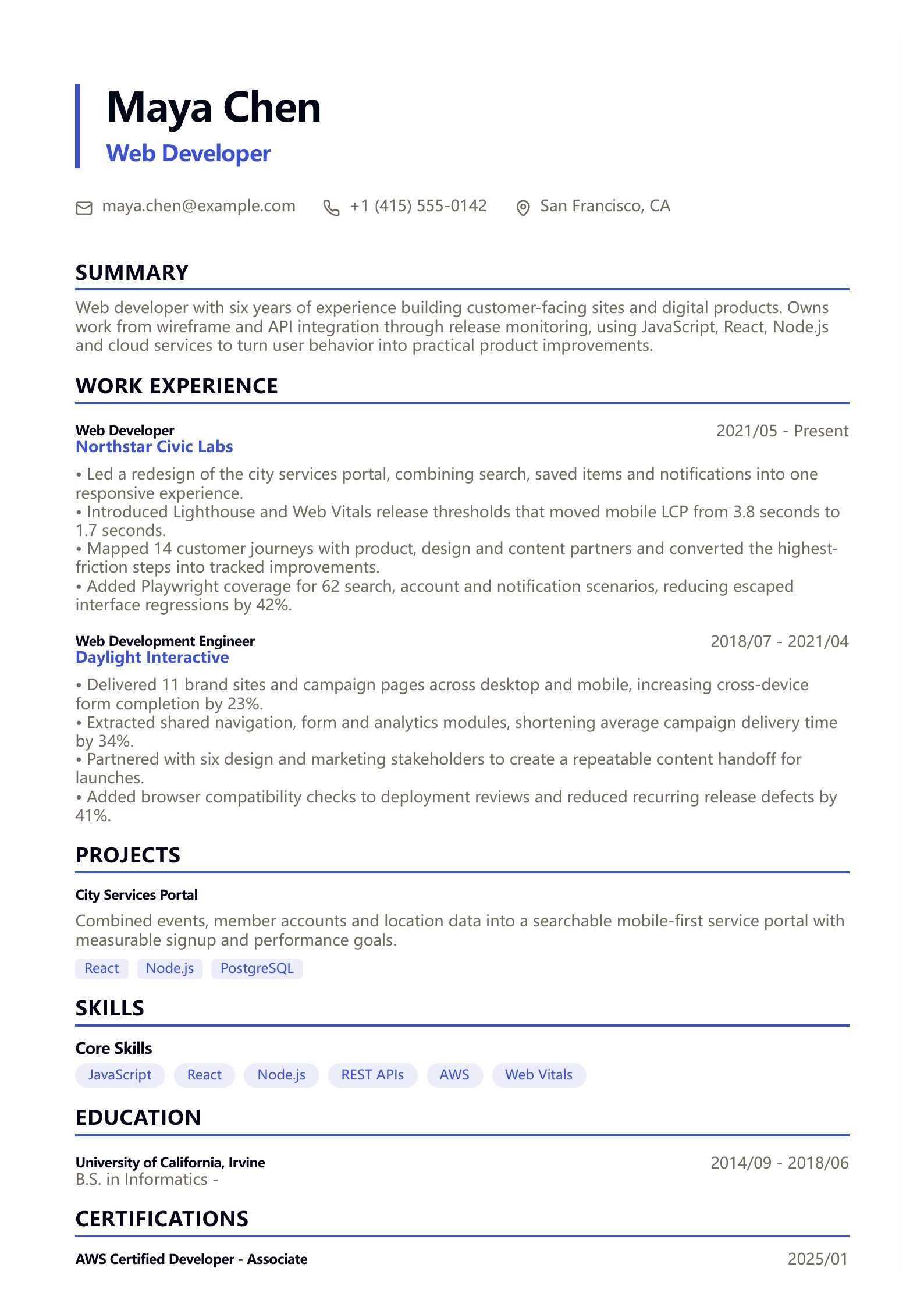
A balanced web development example covering responsive product delivery, APIs, performance and dependable release practices.
Explore 18 independent examples covering responsive websites, enterprise applications, APIs, CMS platforms and measurable engineering results.
All names, companies, contact details, education and metrics are fictional examples for educational use.
Start with a role and experience level close to yours, then replace every fictional detail with evidence from your own work.
Best for: General web developers and website product engineers
A balanced web development example covering responsive product delivery, APIs, performance and dependable release practices.
Best for: Web developers with one to three years of experience
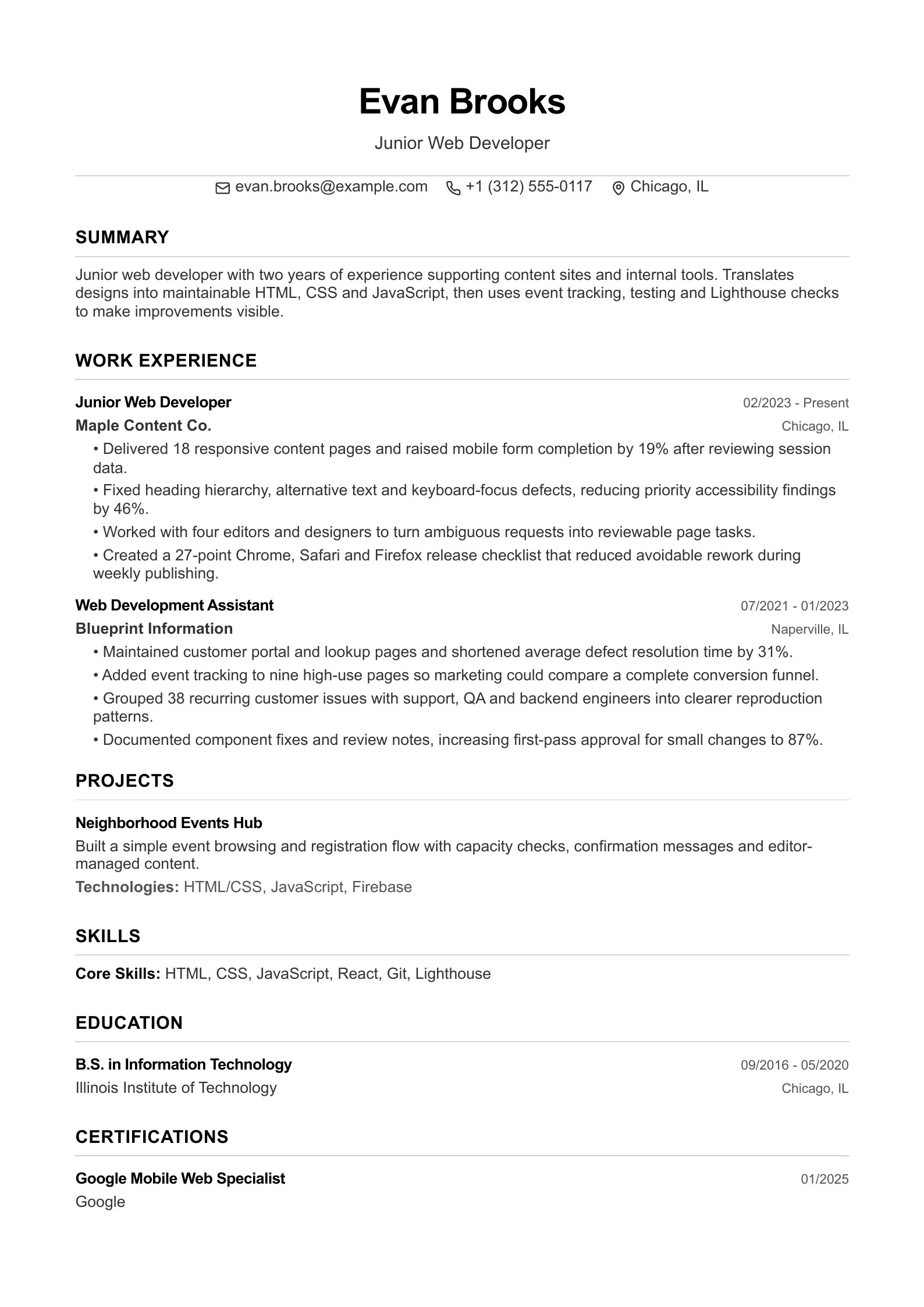
A junior web resume focused on responsive interfaces, debugging, SEO and early product delivery.
Best for: Students and recent graduates seeking web internships
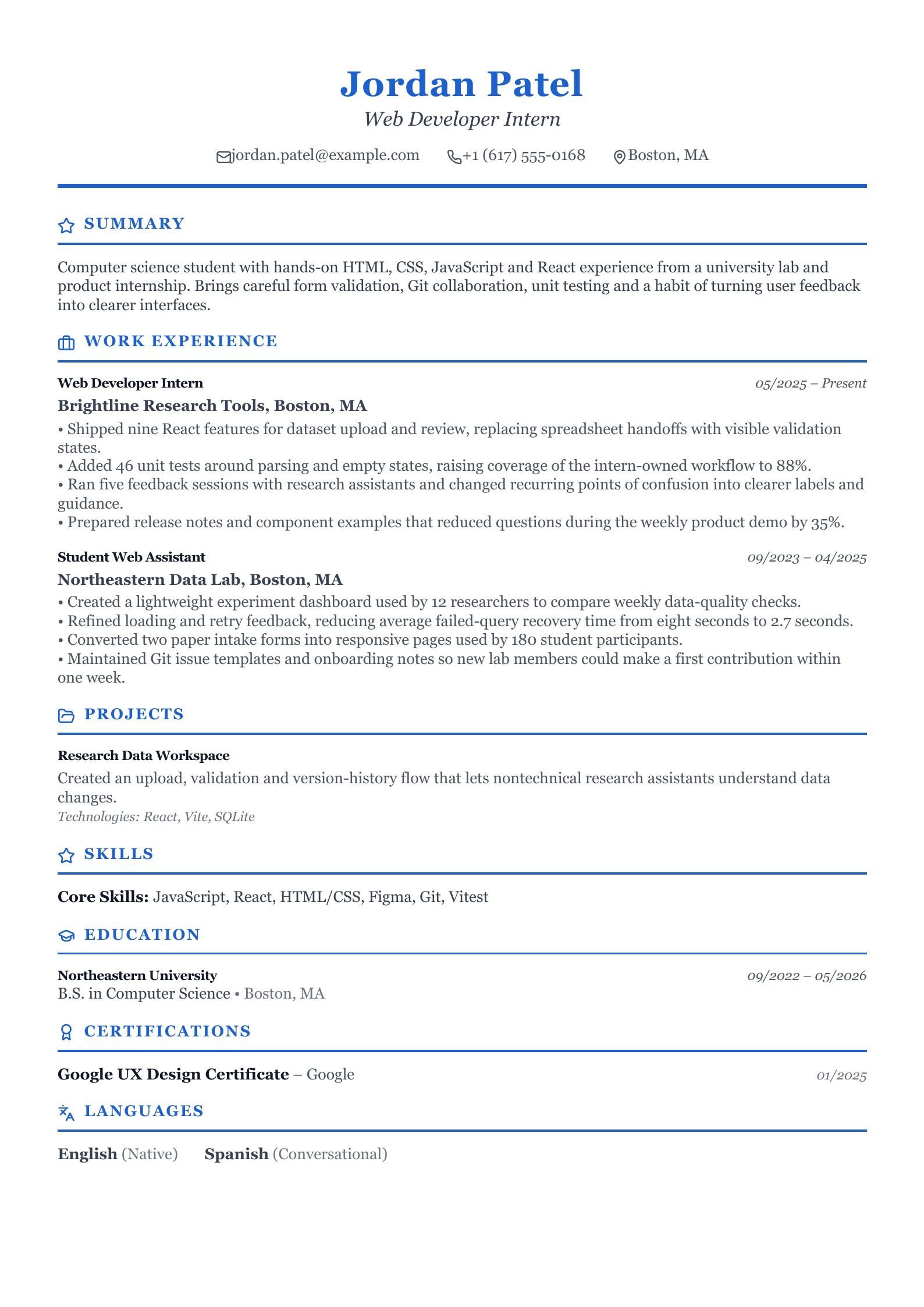
An internship example connecting coursework, practical delivery, testing and documentation habits.
Best for: Senior web developers and platform-focused engineers
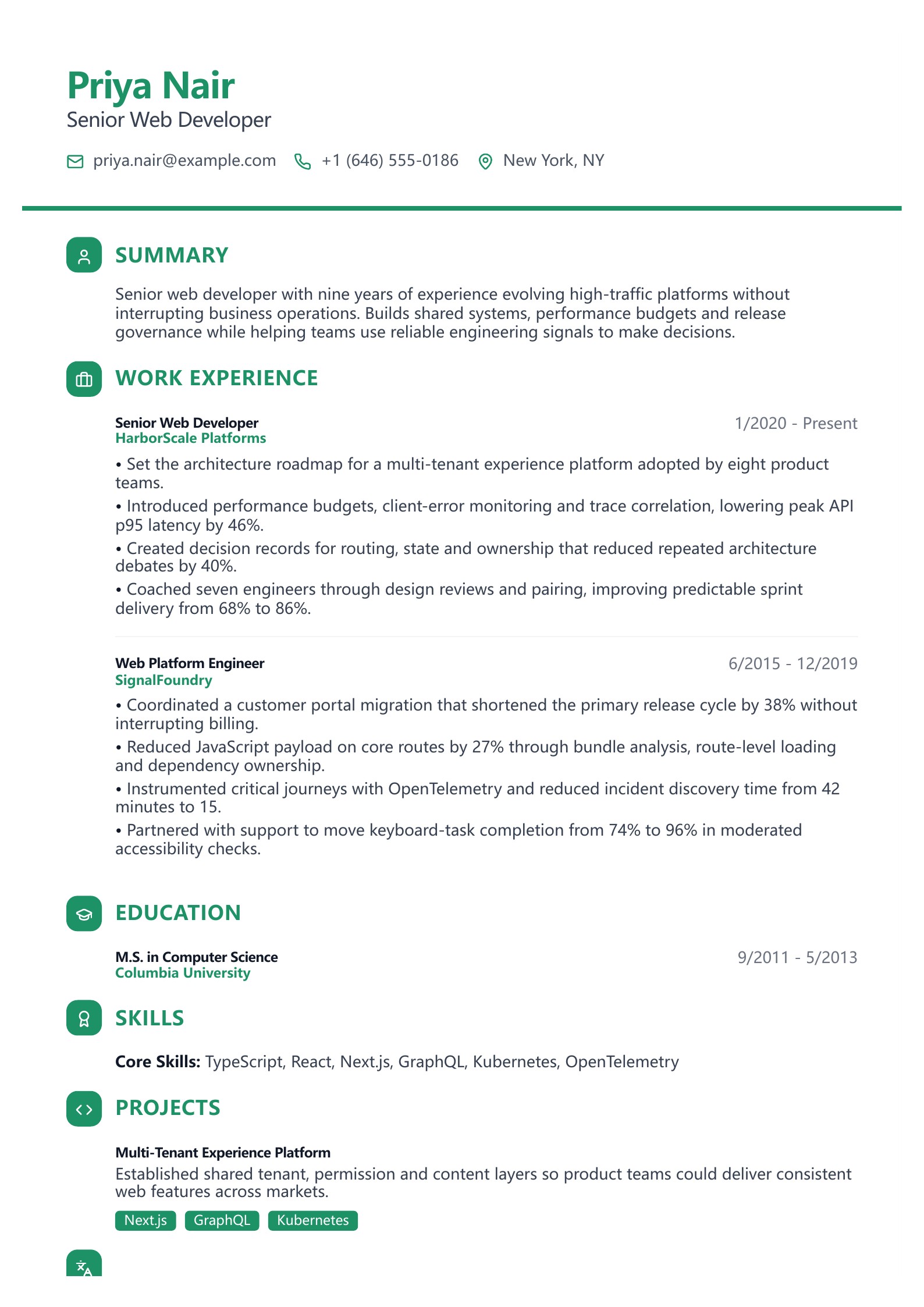
A senior example highlighting platform architecture, performance governance, observability and technical influence.
Best for: Java, Spring Boot and enterprise web development roles
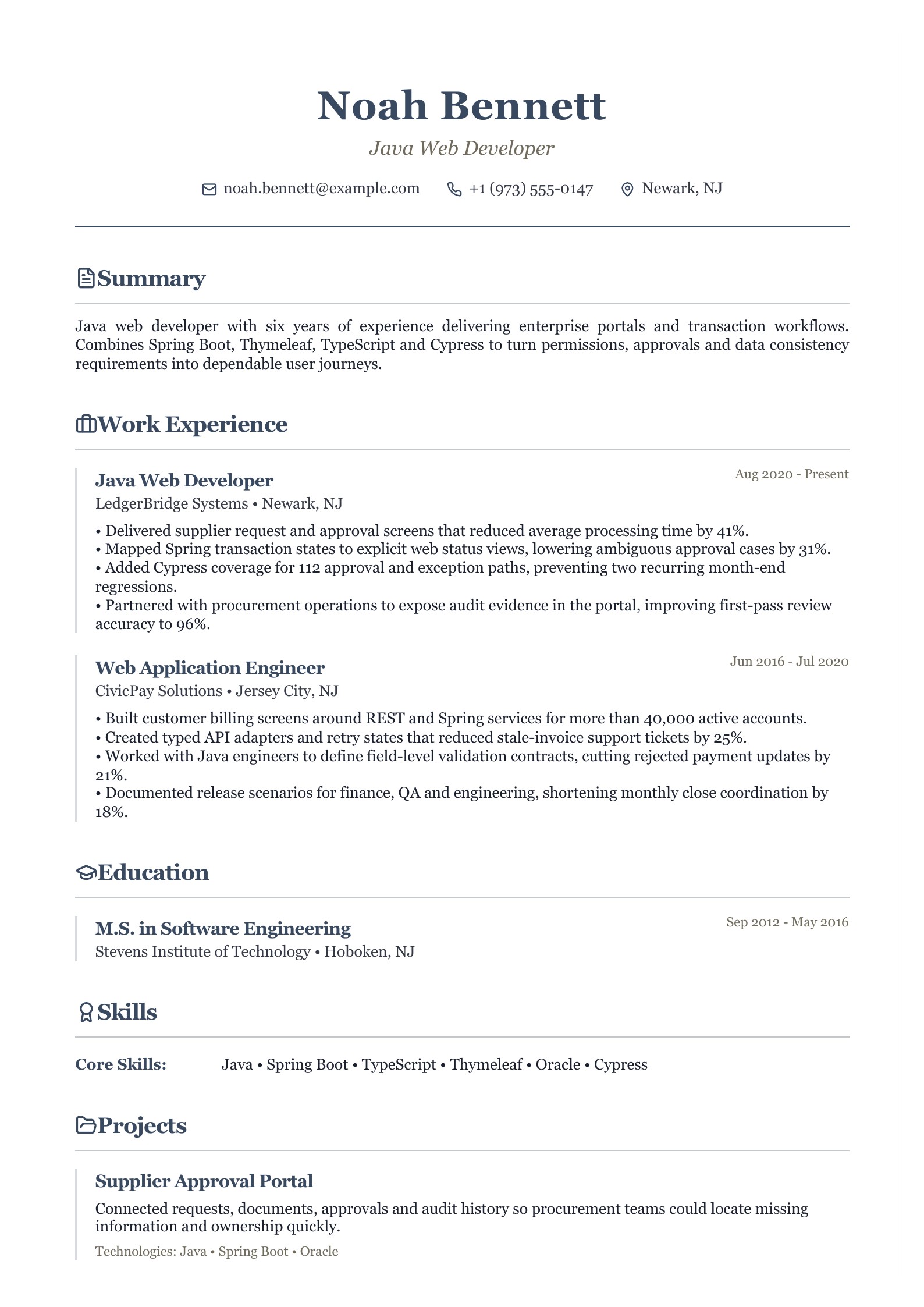
A Java and Spring web example for enterprise portals, transaction workflows and clear front-end contracts.
Best for: ASP.NET, Azure and enterprise web application roles
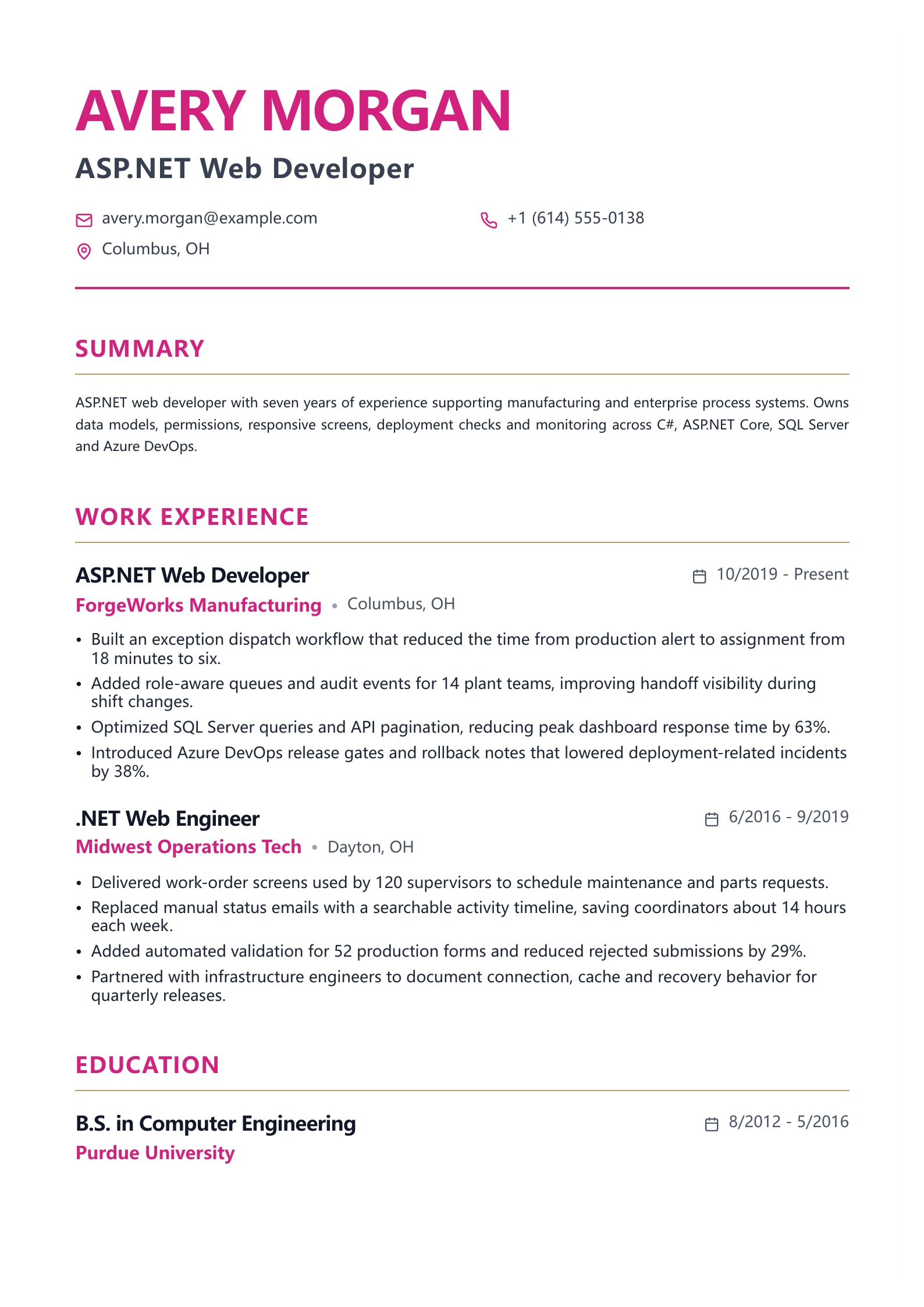
An ASP.NET Core example covering C#, SQL Server, Azure and reliable enterprise workflow delivery.
Best for: Internal applications and workflow automation
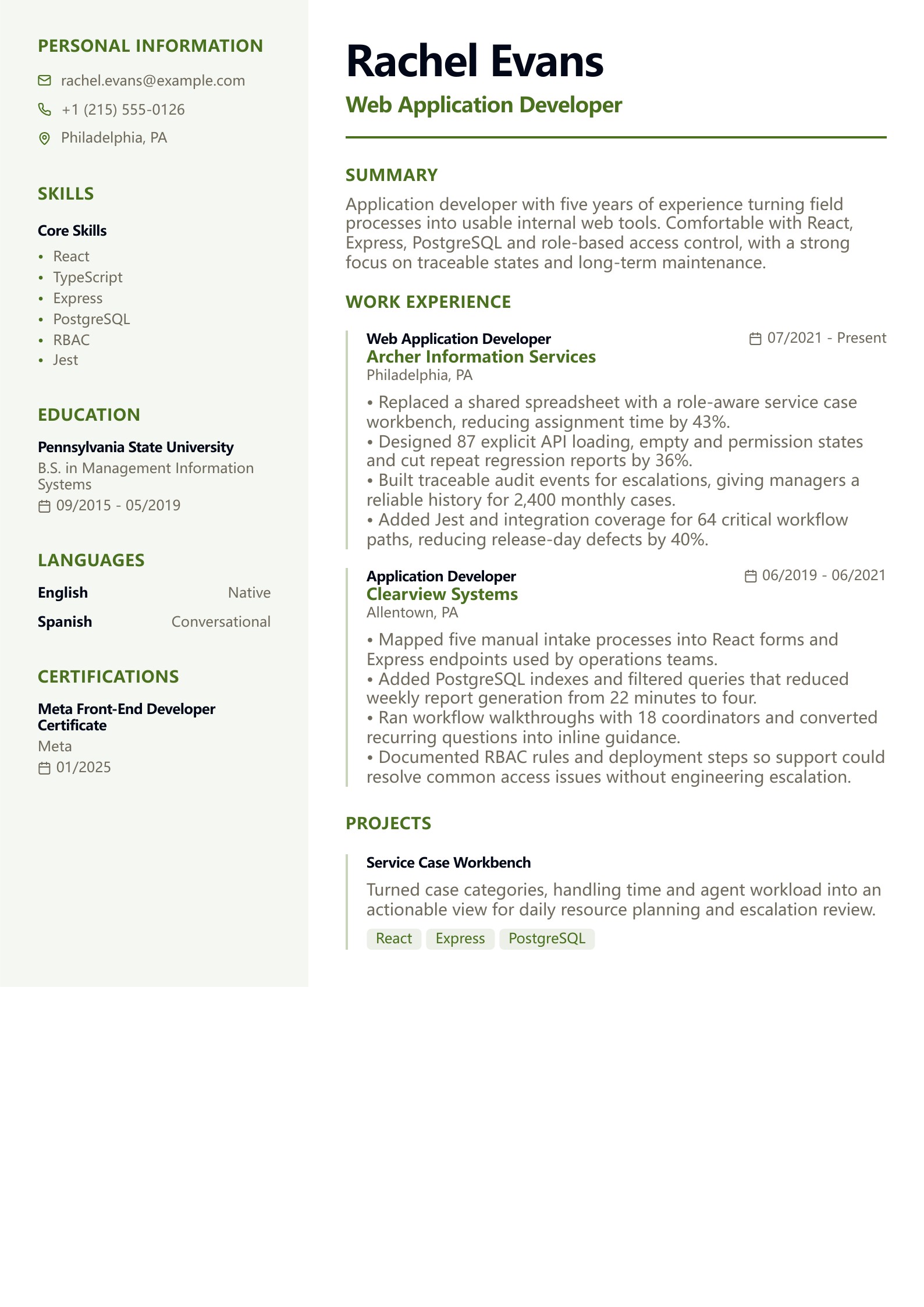
An enterprise application example showing workflow discovery, permissions, APIs and maintainable delivery.
Best for: CMS, enterprise content platforms and website governance
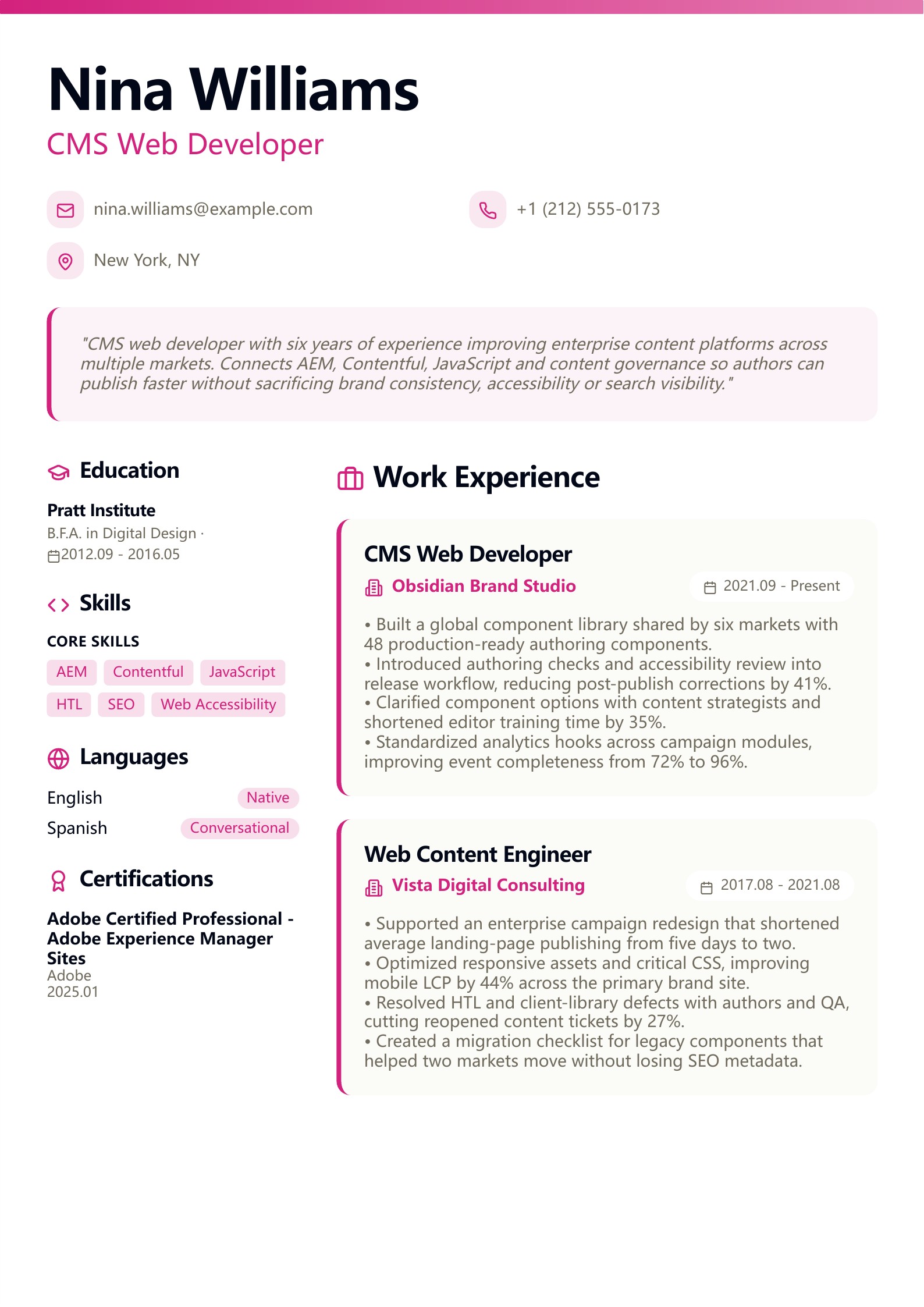
A content-platform example focused on authoring experience, component governance, SEO and publishing quality.
Best for: Web UI, design engineering and product interface roles
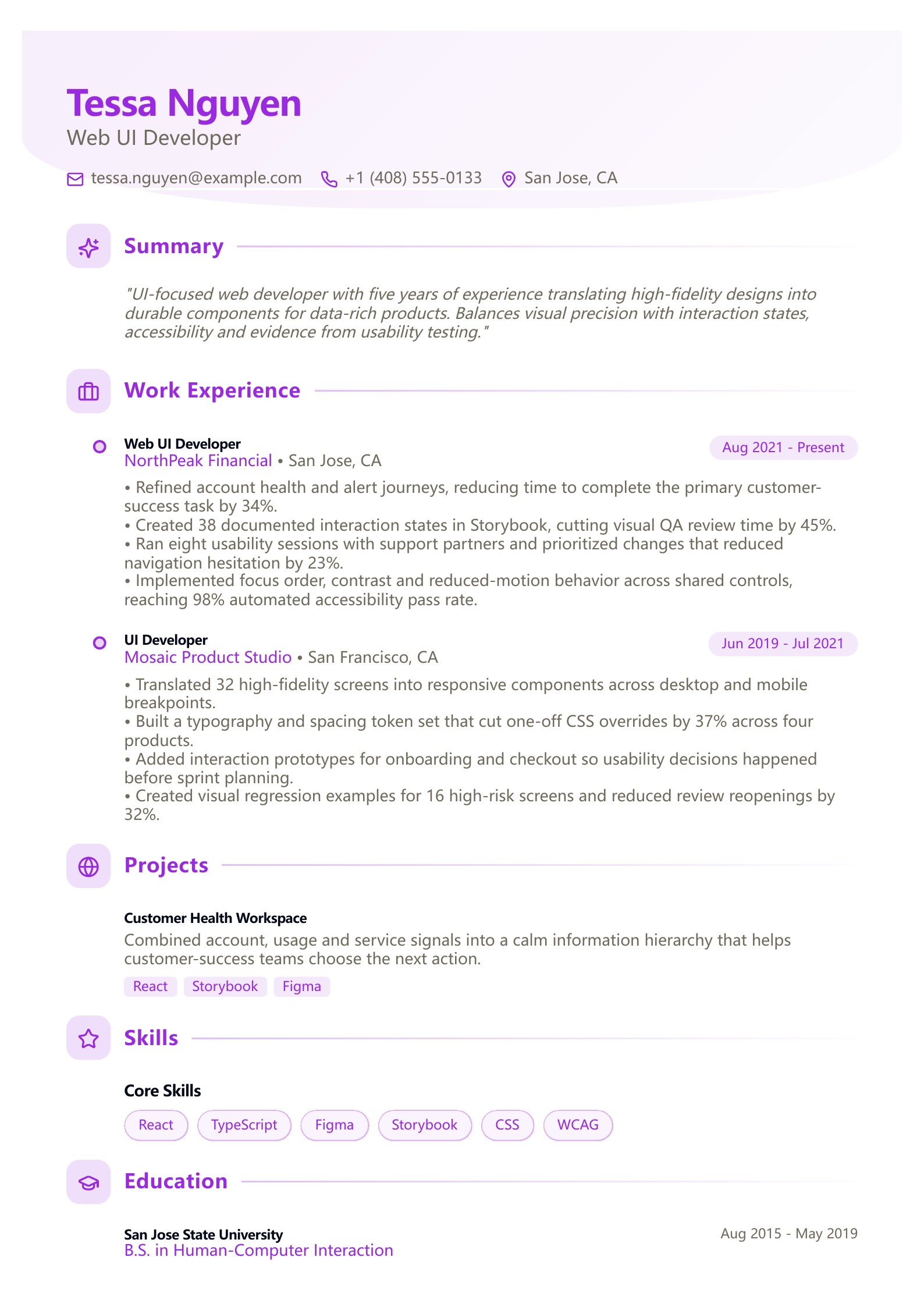
A UI implementation example combining design systems, interaction states, performance and accessibility.
Best for: Python web, data products and SaaS engineering
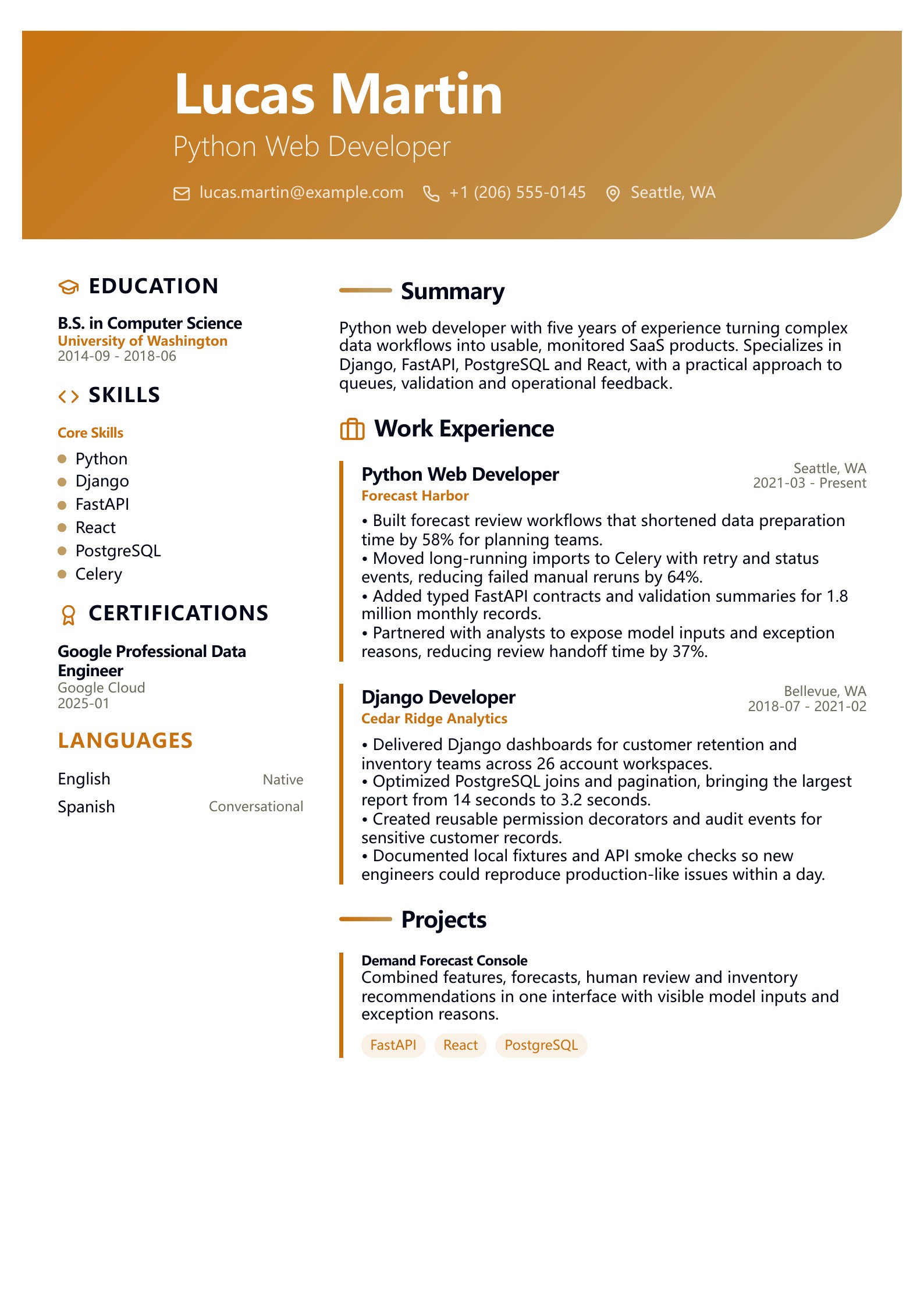
A Python web example for Django and FastAPI, data products, asynchronous jobs and monitored APIs.
Best for: WordPress, content commerce and website performance roles
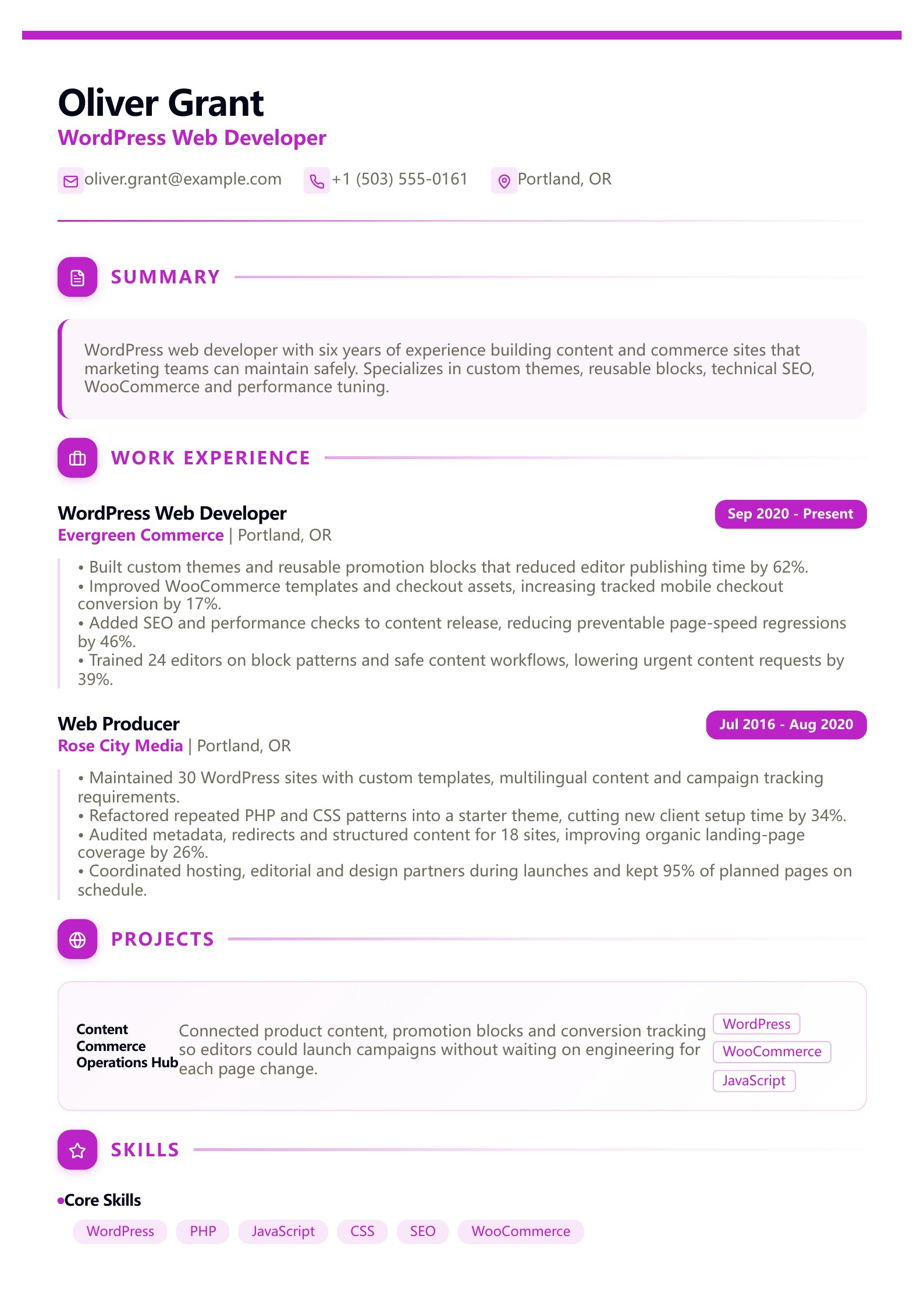
A WordPress example covering custom themes, block patterns, WooCommerce, SEO and editor enablement.
Best for: PHP, Laravel and e-commerce web development
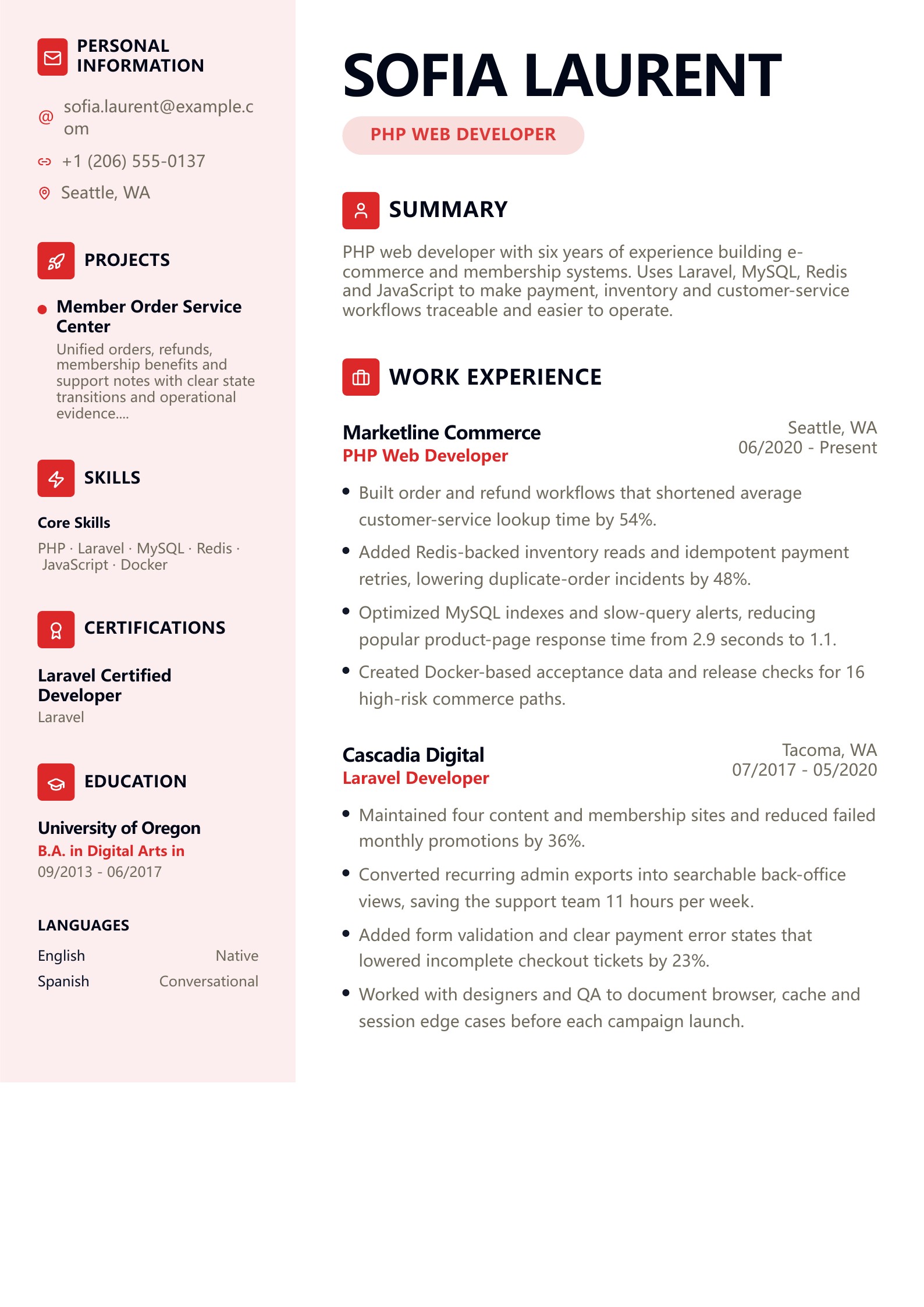
A PHP and Laravel example covering commerce workflows, payments, caching and maintainable operations tools.
Best for: React web products and SaaS front-end teams

A React-focused example for TypeScript, state management, SSR, design systems and product experience optimization.
Best for: Front-end web, content sites and B2C products
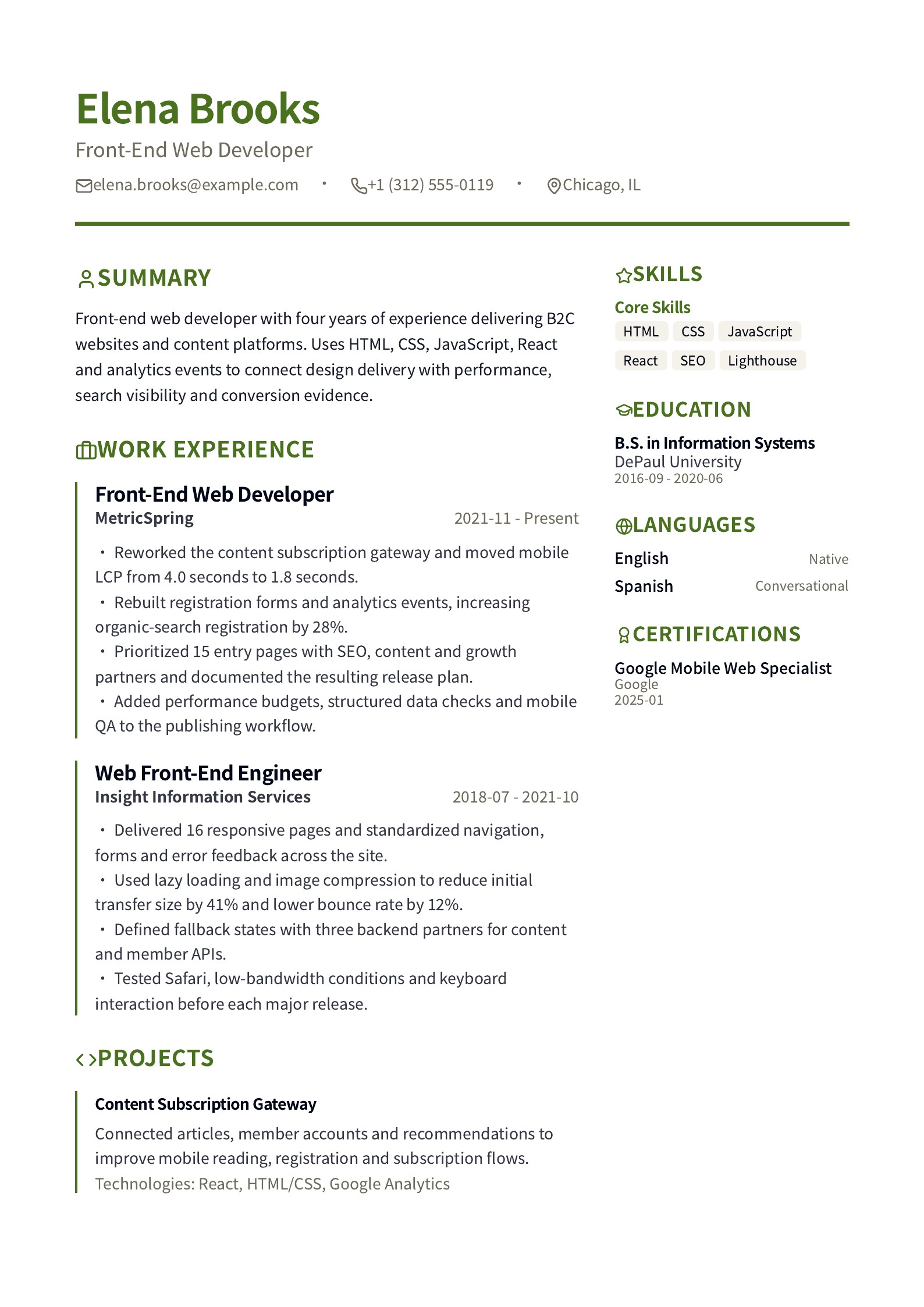
A front-end web example emphasizing responsive delivery, Web Vitals, SEO, accessibility and API integration.
Best for: Web services, API platforms and integration engineering
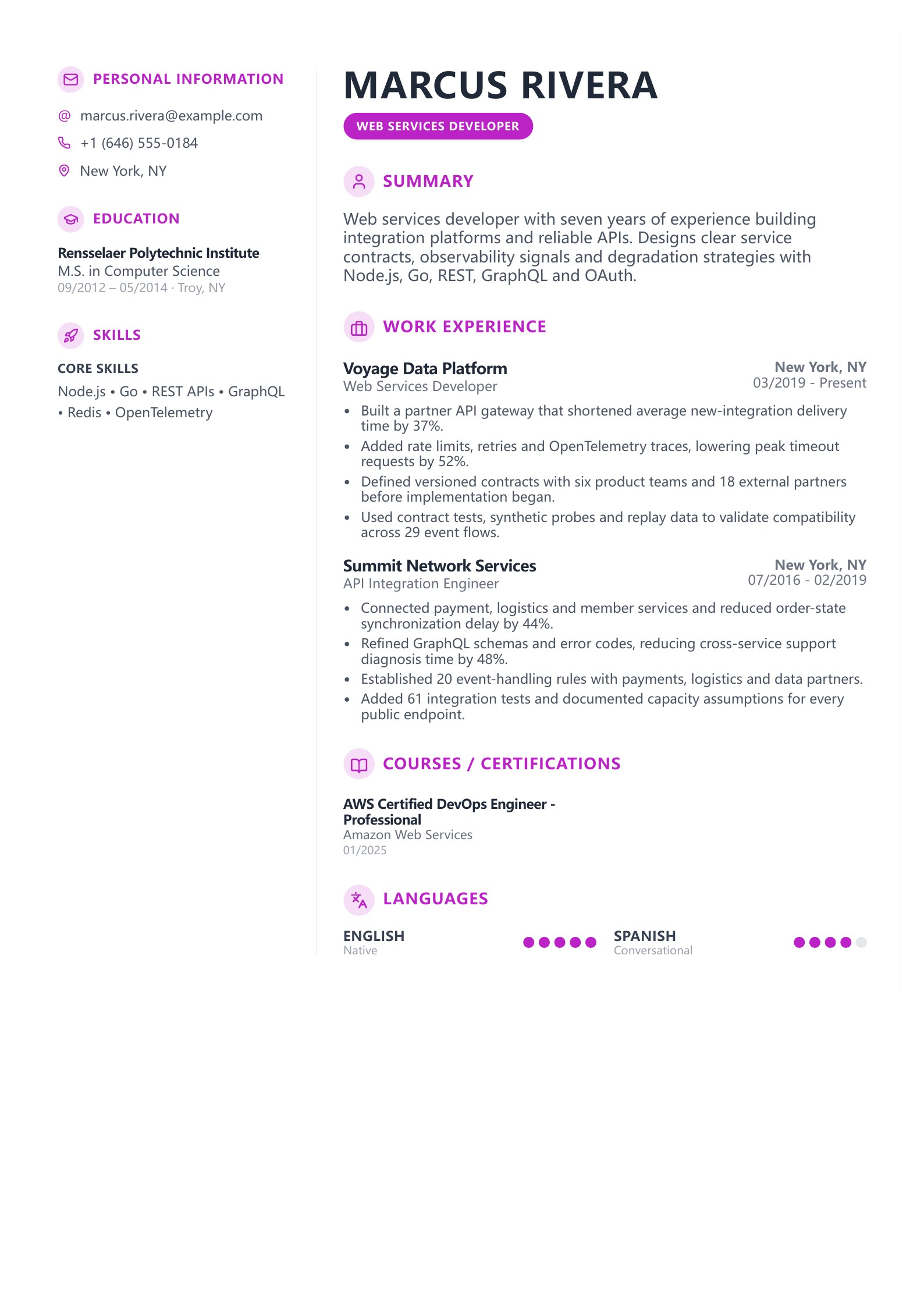
An API-focused web example for REST, gateways, authentication, caching and service reliability.
Best for: Google Cloud, Firebase and web platform roles
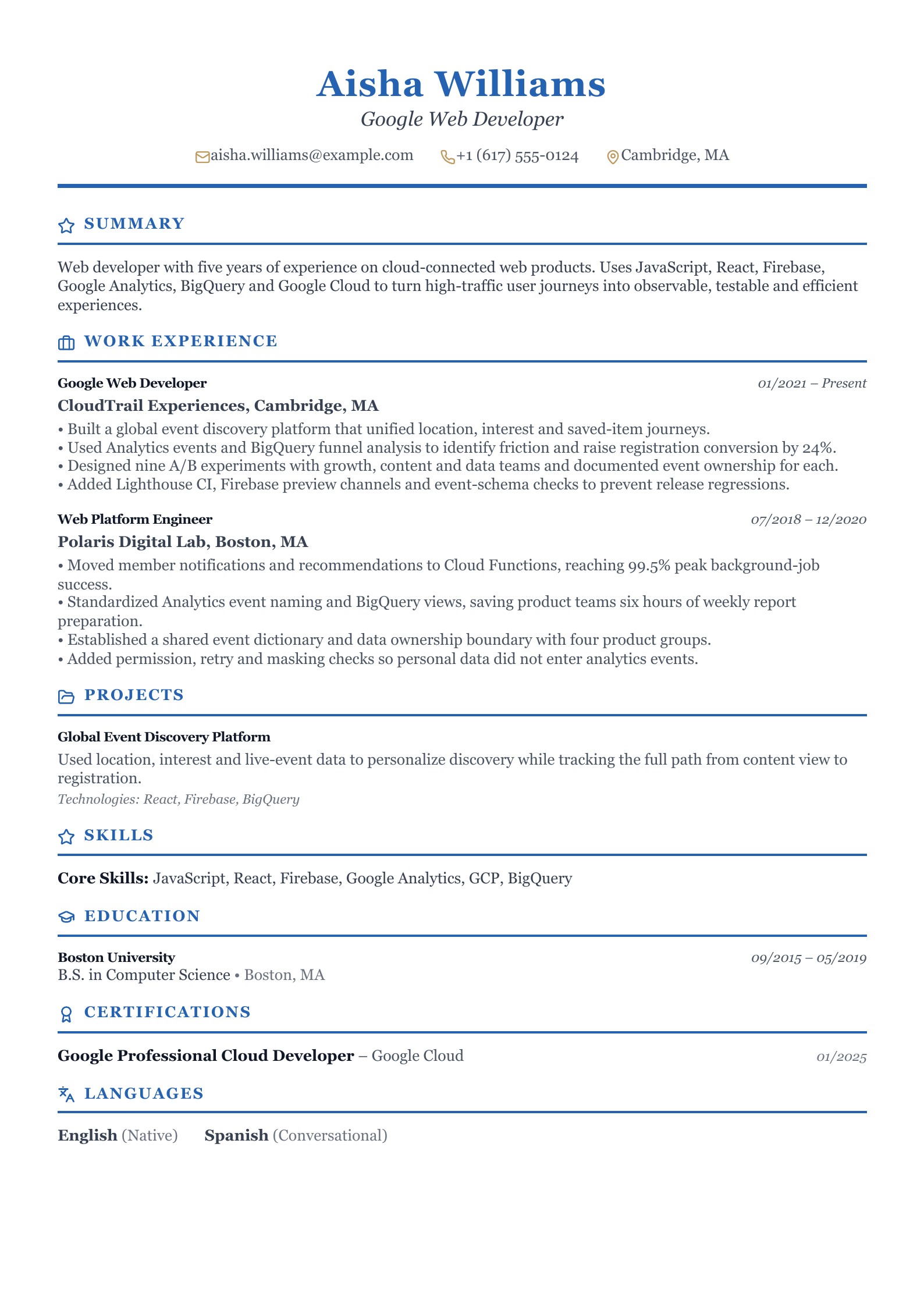
A Google ecosystem example focused on web performance, analytics, Firebase and cloud delivery.
Best for: Design tools, creative platforms and highly interactive web products
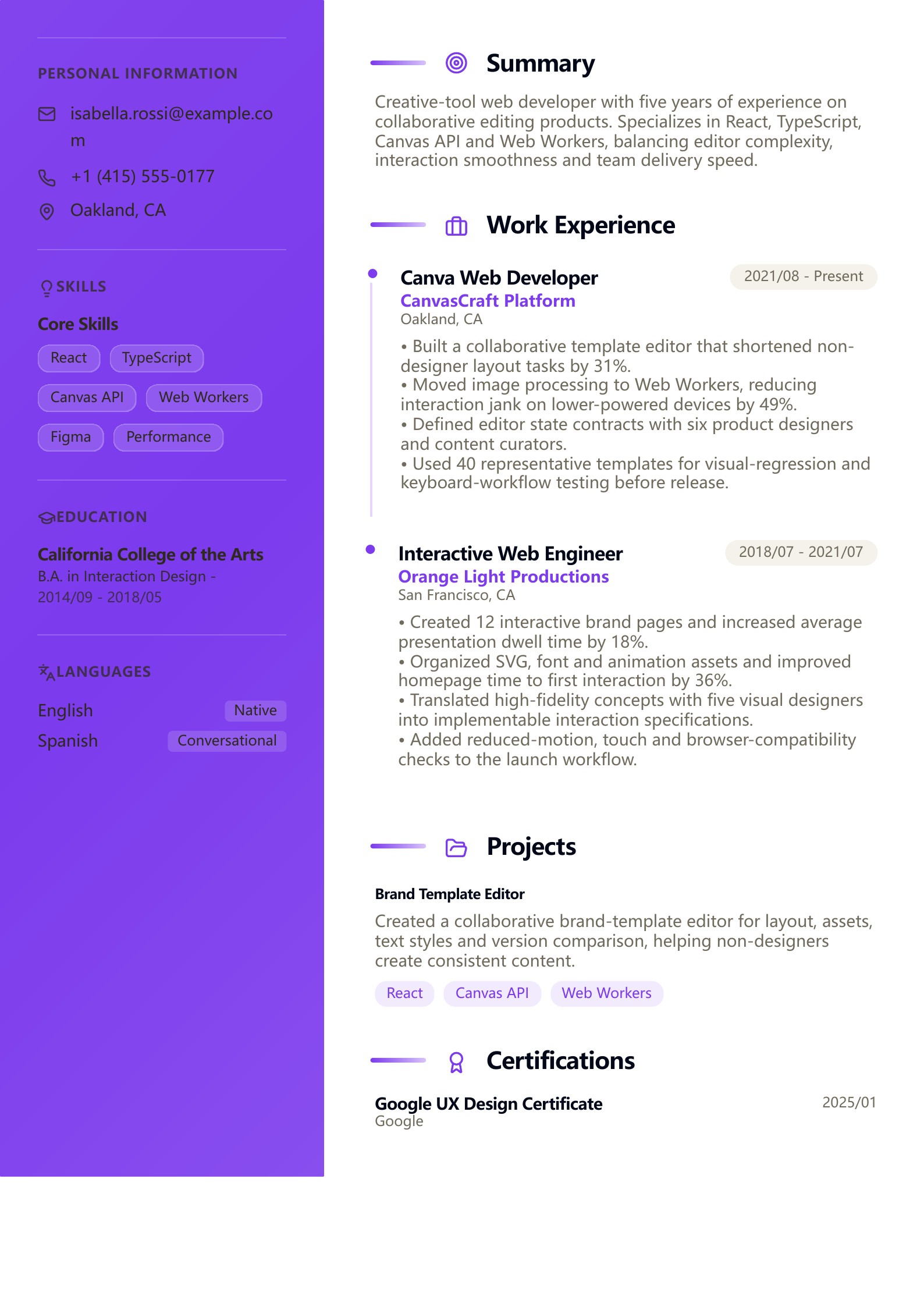
A creative-tool web example for interactive editors, Canvas APIs, templates and collaboration performance.
Best for: Back-end web, API and data service engineering
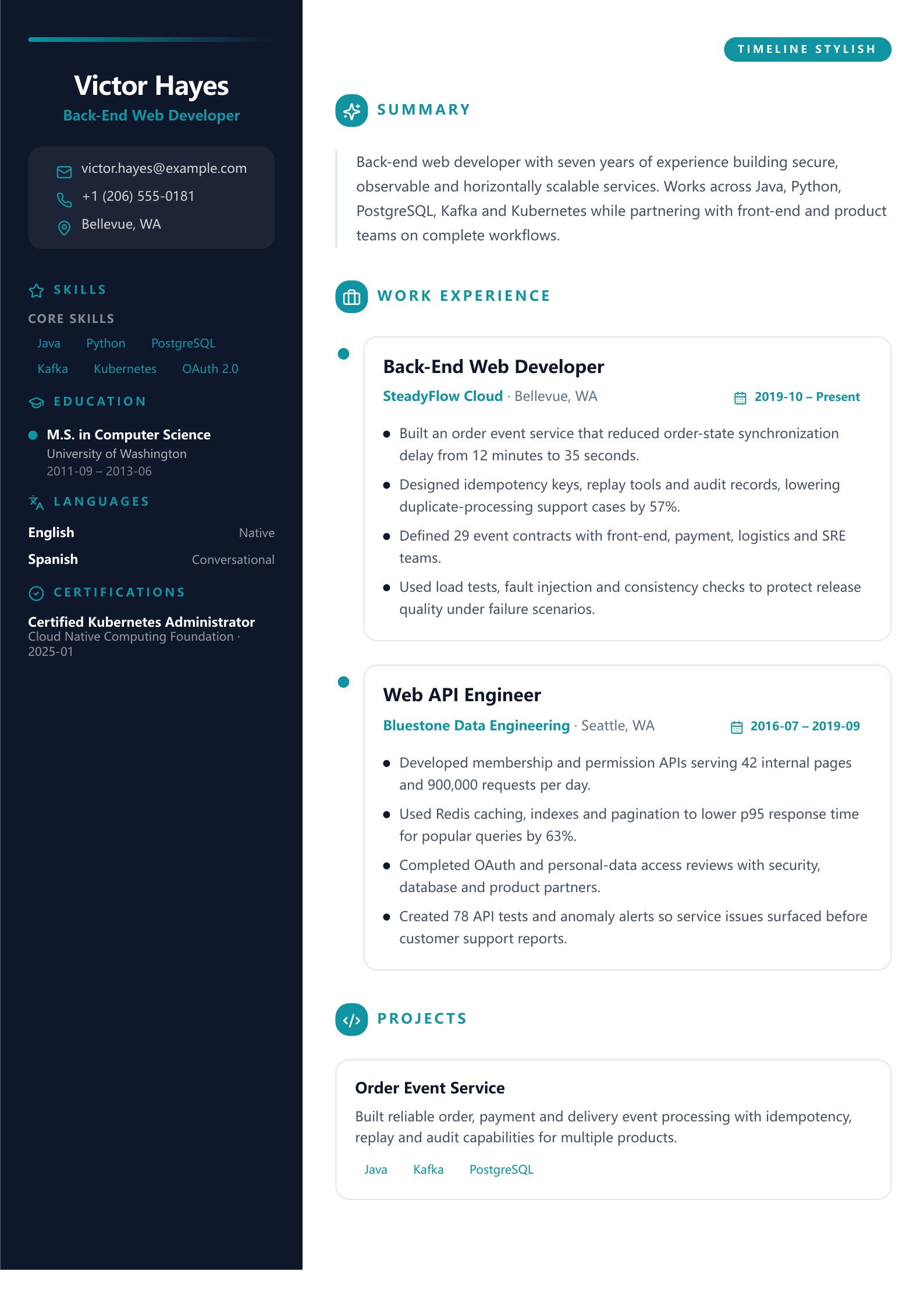
A back-end web example covering APIs, databases, authentication, caching and reliable service operations.
A strong web developer resume makes ownership visible. Connect the product context, website or service boundary, technical decisions, delivery constraints and result that followed.
Start with a change a hiring manager can understand: faster interaction, fewer accessibility defects, shorter publishing cycles, higher conversion or more predictable releases. Then explain how your implementation made that change possible.
Say whether you owned the interface, API, data model, CMS, tests, deployment, monitoring or the full workflow. This is more credible than listing a framework without explaining your contribution.
Include users, page count, data volume, team size, release cadence, browser coverage, performance targets or legacy constraints when they help the reader judge the result. Use numbers you can explain in an interview.
Show the websites, applications, APIs or content platforms you owned, the constraints you worked within and the measurable change that followed. Use technologies in context instead of presenting an unexplained keyword list.
Yes. All 18 English examples include a complete PDF download and a first-page JPG preview. Names, companies, contact details and metrics are fictional examples for educational use.
Four focused bullets are enough for most roles in these examples. Lead with the outcome, then add the technical approach, scale or collaboration context and how you validated the result.
Choose the example whose product context and delivery responsibilities resemble your target role. Keep the structure, then replace the fictional evidence with work you can explain in an interview.
Yes. Coursework, internships, support work, portfolio products and freelance delivery can show ownership. Explain what you built, how you tested it and what changed for users or teammates.
Yes. Keep your underlying evidence, but move the most relevant stack, product context and outcomes toward the top. Use job-description terminology only when it accurately describes your experience.